

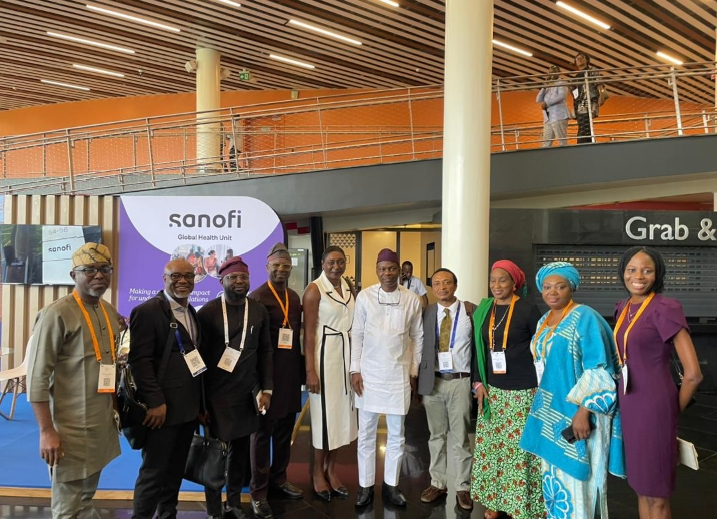
Africa must first build robust, interoperable digital health infrastructure before attempting to harness the full potential of Artificial Intelligence (AI) in healthcare, Nigeria’s Minister of State for Health and Social Welfare, Dr Iziaq Adekunle Salako, has warned.
Speaking at the opening of the 6th Africa Digital Health Summit (ADHS 2026) in Abuja on 1 October, Salako said a strong digital foundation was essential for the continent to benefit from what he described as the “next frontier of health technology.” He argued that without trustworthy data, secure systems and skilled personnel, AI initiatives risk becoming expensive experiments with limited real-world impact.
Salako stressed that AI cannot compensate for weak underlying systems. “If Africa wants to benefit fully from AI, we must invest first in interoperable architecture, trustworthy data, cybersecurity, governance and the people capable of managing these systems,” he said. He warned that deploying advanced algorithms on fragmented, poorly governed data would yield unreliable results and could erode confidence in digital health.
The minister outlined five pillars for what he termed “intelligent health infrastructure”: interoperable digital architecture that allows different systems to communicate; high-quality, standardised data; strong cybersecurity and data protection; clear governance frameworks; and a workforce trained to design, operate and oversee these systems. Only on this base, he argued, can AI tools for diagnostics, planning and service delivery be safely and effectively scaled.
Salako linked this message to Nigeria’s own reform agenda. He said the country has moved past proving digital health through isolated pilot projects and is now focused on scaling integrated systems that deliver measurable impact. The National Digital Health Architecture (NDHA), endorsed by all 36 states and the Federal Capital Territory, is intended to create an interoperable ecosystem anchored on the principle of “One Patient, One Health Record.”
To fund this transition, the federal government estimates it will need about ₦500 billion (roughly $300 million) over the next five years to build the digital infrastructure required to modernise healthcare delivery and advance universal health coverage. Salako called on development partners, state governments, the private sector and technology innovators to align investments with the NDHA rather than creating parallel, incompatible systems.
The minister acknowledged that significant structural gaps remain. An assessment of Nigeria’s 79 federal tertiary hospitals showed an average 74.5 per cent adoption of electronic medical records, and digital logistics platforms have been deployed across all 774 local government areas to improve vaccine supply chains. Yet at primary care level, 43 per cent of facilities lack electricity and about 60 per cent of rural centres have no internet connectivity, severely limiting the reach of digital tools.
Salako said these gaps underscored the need for sustained investment in power, connectivity and basic infrastructure alongside software and platforms. He also highlighted shortages in digital health skills, limited interoperability among legacy systems and continued dependence on donor funding as key constraints that must be addressed before AI can be meaningfully deployed at scale.
While urging caution on infrastructure, Salako did not dismiss AI’s potential. He pointed to ongoing efforts to leverage AI and emerging technologies to expand services such as eye care to rural communities, improve early diagnosis and strengthen referrals. In parallel, Nigeria is pursuing partnerships to localise production of advanced medical equipment, including radiotherapy machines, with plans to integrate AI-assisted treatment planning and tele-oncology links by 2030.
His core message, however, remained consistent: AI should be seen as an enabler built on top of solid digital health systems, not a shortcut around them. For Africa, the priority is to close the execution gap in health system strengthening before chasing the next wave of technological hype.
For African policymakers and investors, Salako’s remarks serve as a reminder that digital health transformation is fundamentally an infrastructure and governance challenge. Countries that invest in interoperable records, data quality, cybersecurity and workforce capacity will be better positioned to adopt AI responsibly and sustainably. Those that skip these steps risk wasting resources on tools that cannot be effectively integrated or trusted.
As the continent debates how to harness AI for health, the emphasis is shifting from flashy pilots to the less glamorous but essential work of building systems that can last. For Salako and many of his counterparts, that is the only credible path to intelligent, AI-enabled healthcare in Africa.
Africa Presents is a Pan-African digital magazine and monthly publication covering politics, business, economy, culture, tech, and the stories shaping Africa and its diaspora. Visit africapresents.com and follow @AfricaPresents for daily coverage and monthly themed magazine editions.






Leave a comment