

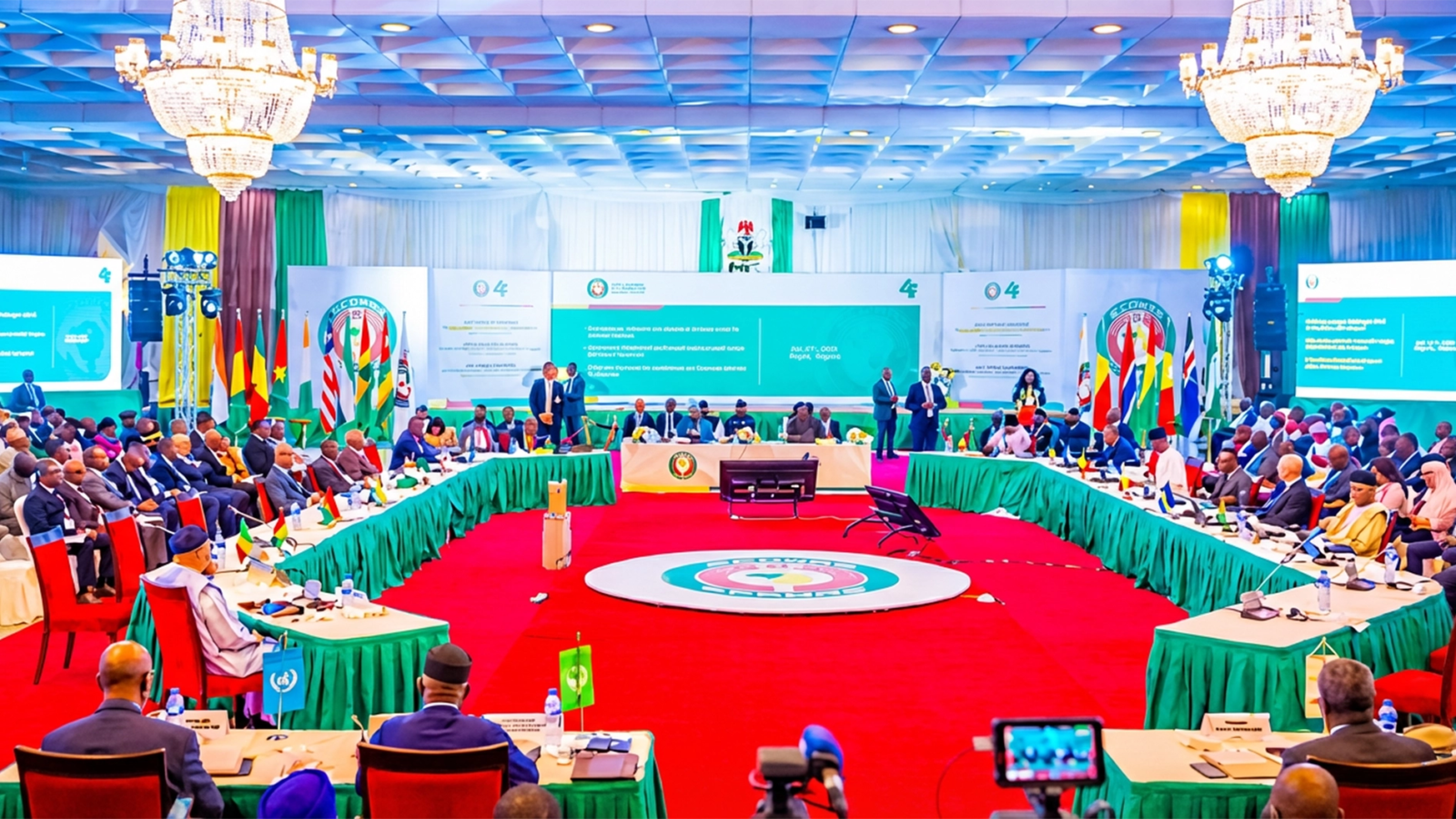
The Economic Community of West African States (ECOWAS) has warned that the region is facing increasingly complex security threats that transcend national borders, calling for stronger regional cooperation, intelligence sharing and collective action to prevent further destabilisation.In a formal warning issued on the 30th of September, 2026, ECOWAS highlighted concerns over the spread of extremist activities, transnational organised crime, maritime insecurity and the challenges of managing porous borders in a region already under severe strain. The bloc said violent extremism, terrorism, political tensions, organised crime and humanitarian pressures were becoming increasingly interconnected across West Africa.
The warning comes as West Africa confronts what experts describe as an “existential security threat,” with thousands killed and hundreds of thousands displaced by armed groups ideologically linked to al-Qaeda and ISIL (ISIS). These groups have routinely attacked military outposts and civilian settlements from Mali to Nigeria and are increasingly pressing into coastal states such as Togo and Benin.
ECOWAS officials say the persistence of terrorism and violent extremism, coupled with transnational organised crime, maritime insecurity and unconstitutional changes of government, requires stronger regional solidarity, accelerated operationalisation of the ECOWAS Standby Force, enhanced early warning and response mechanisms and sustainable financing to safeguard peace and stability.
The security landscape has been further complicated by the withdrawal of Burkina Faso, Mali and Niger from ECOWAS in 2024 and the formation of their own mutual defence pact, the Alliance of Sahel States (AES). Armed groups are exploiting tensions between ECOWAS and the AES, as well as ungoverned spaces and socio-economic vulnerabilities, to expand their reach.
Another zone of insecurity is forming between Benin, Burkina Faso and Togo, while terrorist groups, particularly Jama’at Nasr al-Islam wal Muslimin (JNIM), have bolstered their presence in areas between Benin, Niger and Nigeria. ECOWAS leaders have described West Africa as “the global epicentre of terrorism and violent extremism,” noting that on a daily basis at least eight terror attacks are recorded, claiming an average of 44 lives.
In response, ECOWAS and member states are pushing for deeper security cooperation. Ghana and its neighbours are seeking to strengthen intelligence sharing and operational information exchange among border and security agencies to tackle cross-border crime, including trafficking in persons, illicit trade, smuggling, cattle rustling and terrorism.
At a recent counter-terrorism meeting, leaders agreed to strengthen regular reviews of peace and security commitments, enhance intelligence sharing, harmonise legal frameworks for cross-border prosecution of terrorism-related offences and reinforce de-radicalisation programmes. On border security, they committed to consider adopting “hot-pursuit” agreements, draft a foundational memorandum of understanding within three months and strengthen mechanisms against trafficking in narcotics, humans and arms.
ECOWAS has also moved to activate a regional standby force to combat waves of violence by cross-border armed groups. The plan includes mobilising an initial 2,000 soldiers by the end of 2026 to tackle armed groups that are expanding their territory and sharpening tactics in the region. This force is intended to complement national efforts and provide a rapid response capability where threats spill across borders.
At the same time, the bloc is working to strengthen its Early Warning and Response mechanisms, recognising that timely information and coordinated action are critical to preventing localised incidents from escalating into broader crises.
For West Africa, the ECOWAS warning underscores the urgency of closing gaps in regional security architecture before threats become unmanageable. The combination of jihadist expansion, organised crime, political instability and fractured regional cooperation creates a volatile mix that could undermine decades of integration efforts.
If ECOWAS and its partners can deliver on commitments to intelligence sharing, joint operations, legal harmonisation and rapid deployment, there is still a chance to contain the spread of violence and protect vulnerable communities. If not, the risk is that cross-border threats will continue to outpace national and regional responses, with profound consequences for peace, governance and development across West Africa.
Africa Presents is a Pan-African digital magazine and monthly publication covering politics, business, economy, culture, tech, and the stories shaping Africa and its diaspora. Visit africapresents.com and follow @AfricaPresents for daily coverage and monthly themed magazine editions.







Leave a comment