

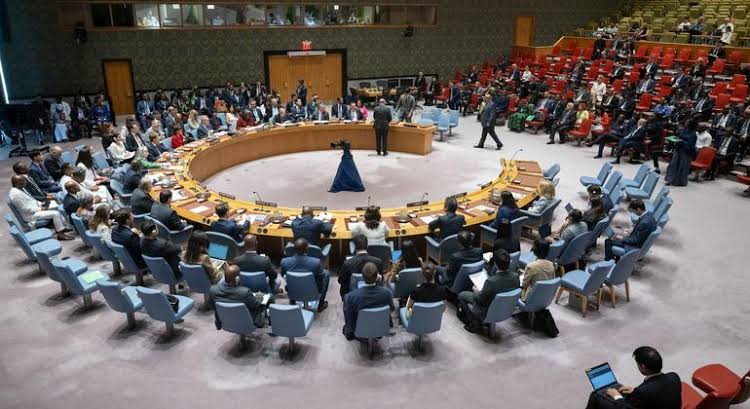
Finland has thrown its diplomatic weight behind calls for a stronger African voice at the United Nations Security Council, explicitly backing the creation of at least two new permanent seats for the continent as part of a broader push to reform the body.President Alexander Stubb used his address to the 81st UN General Assembly in New York on the 22nd of September to reiterate Finland’s long-standing position that the Security Council must be expanded to reflect current global realities. He called for at least two new permanent seats for Africa, two for the Asia-Pacific region and one for Latin America and the Caribbean, while also proposing that no single state should retain veto power.
Finland’s stance aligns with the broader Nordic position on Security Council reform. The Nordic countries have consistently stated that equitable representation is essential and that Africa should be treated as a “special case” in any restructuring. They support seats for Africa in both the permanent and non-permanent categories, framing this as part of redressing the historical injustice done to the continent.
In practical terms, this means Finland backs the African Union’s Ezulwini Consensus demand for no fewer than two permanent seats with full privileges, including veto rights if the veto is retained, plus additional non-permanent seats. While Finland has also floated the idea of abolishing the veto altogether, its core message to African capitals is that the continent deserves a significantly stronger and more permanent presence in the Council.
Finland’s support is not limited to general statements. In Lagos on the 30th of September, Finnish Ambassador to Nigeria Sanna Selin declared Helsinki’s backing for Nigeria’s quest for a permanent Security Council seat, saying Africa deserves a stronger voice in the UN system. She linked this to President Bola Tinubu’s own calls for reform and emphasised Finland’s interest in seeing African countries play a larger role in global decision-making.
Earlier in June, during a state visit by Kenyan President William Ruto to Helsinki, President Stubb endorsed Kenya’s push for Security Council reform and described Kenya as an increasingly influential voice in global affairs. The joint statements underscored Finland’s willingness to align with key African capitals on the issue, even as the AU has not yet agreed on which countries should occupy any future permanent African seats.
Finland’s advocacy comes as it campaigns for a non-permanent seat on the Security Council for 2029–2030. President Stubb announced the candidacy during his UNGA speech, framing it as part of Finland’s commitment to multilateralism, international law and conflict prevention. Helsinki argues that its experience in mediation, peacekeeping and support for the rules-based order makes it a strong candidate, while also using the campaign to push its reform agenda.
By coupling its own bid with strong support for African representation, Finland is positioning itself as a bridge between the Global North and the Global South on one of the most contentious issues in UN reform. The message to African states is that Finland sees their greater inclusion as essential to the Council’s legitimacy and effectiveness.
For African leaders, Finland’s backing adds to a growing list of middle powers and regional groups that publicly support permanent African seats, even as the five permanent members remain resistant to diluting their own power. The Nordic position, in particular, carries weight in European and UN circles, where Finland is seen as a credible voice on peace and security.
However, the real test will be whether such statements translate into concrete diplomatic pressure on the P5 and into compromises that can secure the necessary two-thirds majority in the General Assembly and eventual ratification by existing permanent members. For now, Finland’s message is clear: a reformed Security Council without strong African representation would be incomplete and out of step with the 21st century.
Africa Presents is a Pan-African digital magazine and monthly publication covering politics, business, economy, culture, tech, and the stories shaping Africa and its diaspora. Visit africapresents.com and follow @AfricaPresents for daily coverage and monthly themed magazine editions.






Leave a comment