

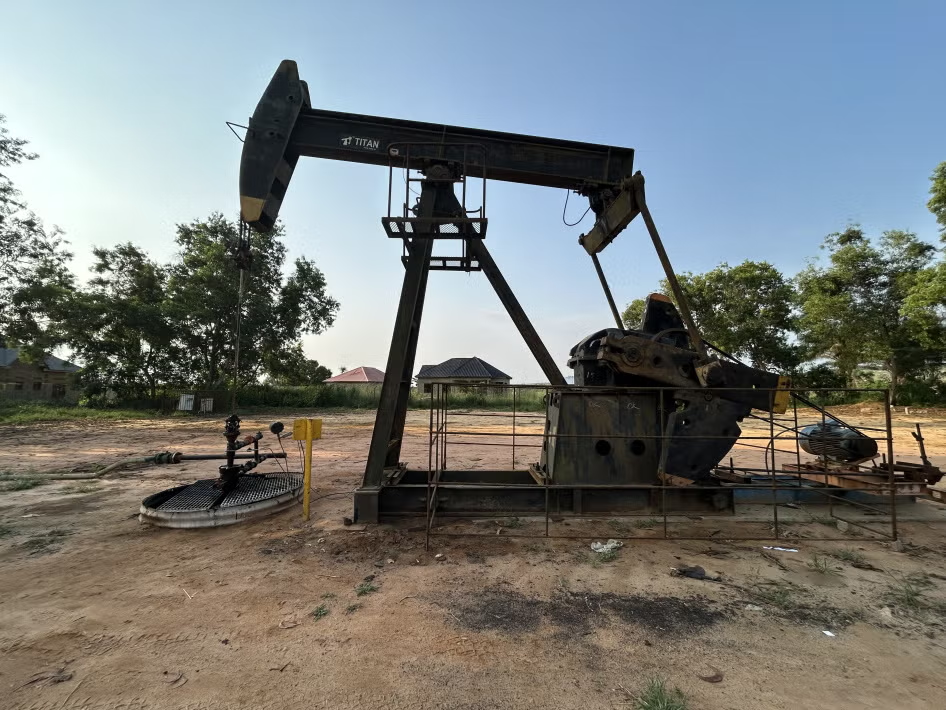
Farmers in the Republic of Congo’s Kouilou department are reporting sharp drops in cassava yields and widespread damage to fruit trees, with a new church-led investigation blaming oil exploitation for contaminating soil, water and air beyond World Health Organization limits.
In a report presented on the 17th of September, 2026, the Justice and Peace Commission of the Diocese of Pointe-Noire, working with Caritas, CCFD and two Congolese research institutes, said residents have observed falling productivity in cassava fields for several years. More recently, fruit trees such as safoutiers, mangoes and bananas have been affected by new diseases, with fruits drying up on the branches or falling before maturity.
According to the report, farmers first noticed worrying changes in their cassava crops, followed by strange afflictions in orchards. “The fruits are like mummified on the tree,” one resident told investigators. The commission said these patterns align with long-term exposure to hydrocarbon pollution and gas flaring from nearby oil operations.
Laboratory analyses cited in the report found that soil, water and air in affected areas are contaminated with hydrocarbons at levels exceeding WHO thresholds. Residents point specifically to gas flaring—the routine burning of associated gas from oil wells—as a major source of air pollution and toxic deposition on farmland.
The diocese named several operators as the biggest contributors to the problem: French energy giant TotalEnergies, Italy’s ENI, Congo’s national oil company SNPC and China’s Wing Wah. The report calls for urgent remediation, stricter enforcement of environmental standards and compensation for communities whose livelihoods have been undermined.
The findings echo concerns raised in other parts of the Congo Basin, where oil and mining activities have been linked to spills, pipeline leaks, open burning of waste and contamination of rivers and groundwater. In the neighbouring Democratic Republic of Congo, audits have similarly flagged pollution from onshore and offshore oil activities, including hydrocarbon and heavy-metal contamination of soil and surface water.
For many households in Kouilou, cassava and fruit trees are not just food sources but core assets. Declining yields and diseased orchards translate directly into reduced income, higher food prices and greater vulnerability. The report warns that without intervention, environmental degradation from oil operations could deepen poverty and fuel social tension in an already fragile region.
Civil society groups are now urging the government to strengthen monitoring, enforce existing regulations and ensure that oil companies adopt cleaner technologies, including ending routine gas flaring and properly managing industrial waste.
Africa Presents is a Pan-African digital magazine and monthly publication covering politics, business, economy, culture, tech, and the stories shaping Africa and its diaspora. Visit africapresents.com and follow @AfricaPresents for daily coverage and monthly themed magazine editions.







Leave a comment