

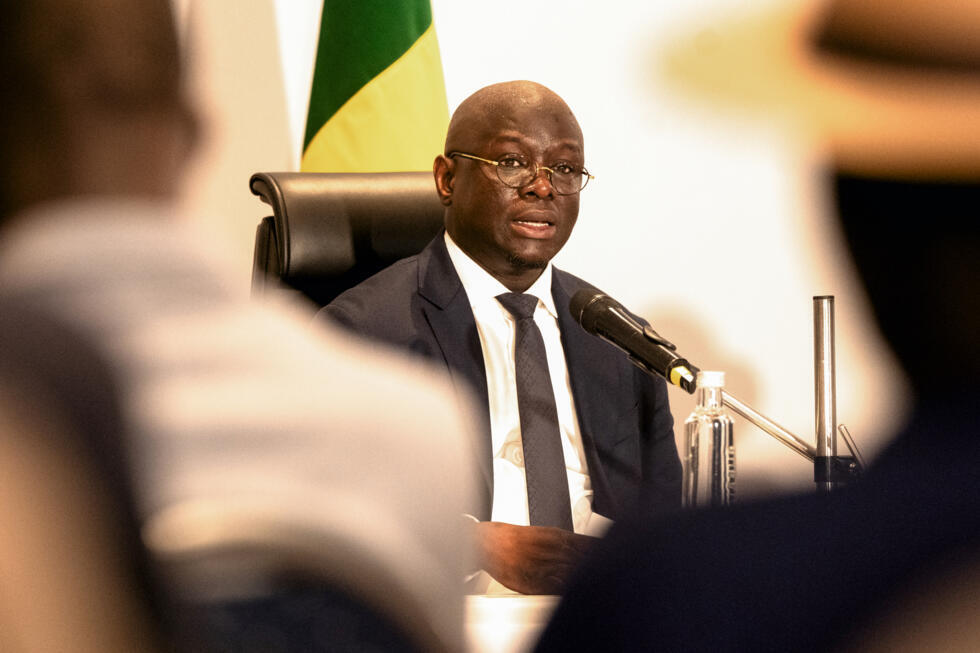
Senegal and the International Monetary Fund (IMF) have reached a staff-level agreement on a new $2.2 billion loan programme to support the country’s economic and financial reforms over the next three years.
The deal, announced on Tuesday, September 1st, 2026, takes the form of a 36-month Extended Credit Facility (ECF) arrangement covering the period 2026–2029. It is designed to help restore debt sustainability, strengthen public finances and protect vulnerable households.
The agreement comes after the IMF suspended a previous $1.8 billion programme agreed in 2023 following the discovery of previously unreported debt under the former administration. The new government, led by President Bassirou Diomaye Faye, has since committed to greater transparency and fiscal discipline.
Under the proposed programme, Senegal plans to pursue a combination of revenue mobilisation, spending rationalisation and improved debt management. The government also intends to adopt a medium-term revenue strategy by 2027 to strengthen domestic resource mobilisation.
As part of the arrangement, Senegal has indicated it will seek a debt treatment under the G20 Common Framework, focusing on external creditors including bilateral lenders, commercial loans and about $1.1 billion in Eurobonds maturing between 2026 and 2028. Debt denominated in the regional CFA franc and owed to local banks will be excluded from the restructuring.
The IMF mission, led by Mercedes Vera Martin, was in Dakar from August 19th to September 1st, 2026, holding discussions with Senegalese authorities on the design of the programme. The staff-level agreement still requires approval by IMF management and the Executive Board, as well as financing assurances from Senegal’s development partners.
The Fund highlighted Senegal’s economic resilience, noting 6.7 percent growth in 2025, supported by the first full year of oil production. However, non-oil growth slowed to 2.2 percent, while inflation remained contained at 1.4 percent. Early 2026 data show a recovery in non-hydrocarbon activity, driven by private consumption.
Key reforms under the programme include stronger public-debt management, improved monitoring of domestic arrears, enhanced oversight of state-owned enterprises and measures to support the business environment and financial inclusion. The IMF also emphasised the need for targeted social transfers to protect low-income households during the adjustment period.
If approved, the programme is expected to help catalyse additional financing from the World Bank, the African Development Bank and other development partners. For Senegal, the agreement represents a critical step toward stabilising public finances and restoring investor confidence after the debt controversy.
Africa Presents is a Pan-African digital magazine and monthly publication covering politics, business, economy, culture, tech, and the stories shaping Africa and its diaspora. Visit africapresents.com and follow @AfricaPresents for daily coverage and monthly themed magazine editions.






Leave a comment