

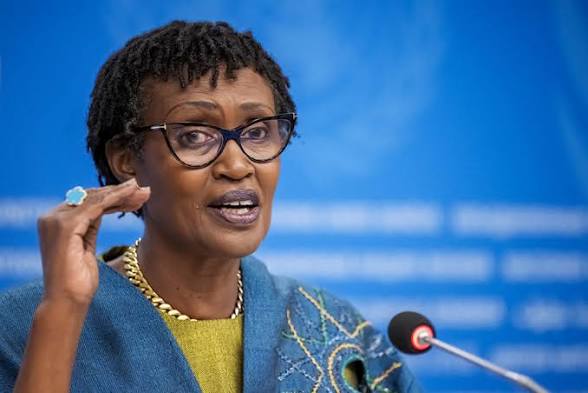
UNAIDS Executive Director Winnie Byanyima has called for a “radical change” in how African governments fund healthcare, warning that the era of relying on external support to sustain the continent’s HIV response is over. Speaking in Accra on Tuesday, Byanyima was direct about the scale of what has already been lost. UNAIDS lost around a quarter of its funding last year, following the dismantling of USAID by the Trump administration and parallel cuts by France, Germany, and the United Kingdom.
The consequences on the ground are already visible. HIV testing in countries with high infection rates has fallen by 22 percent, and in some countries condom distribution has dropped by 90 percent. “We are seeing early signs of serious reversals in our progress,” Byanyima said. “The trend that has been going down may now reverse and start rising.”
Byanyima urged African governments to reprioritise their own health spending, reallocate existing funds, and use scarce resources more efficiently. “Every country must make financial decisions, structural decisions to protect its people’s health,” she said. “So there is a need for Africa to quickly adapt its systems for health in order to keep its people alive and to work towards health sovereignty.”
The call echoes a wider debate across African health policy circles in 2026. As development assistance for health to Africa fell from $25.8 billion in 2021 to roughly $13 billion in 2025, the argument that African health systems must be built on domestic financing rather than external goodwill has shifted from aspiration to urgent necessity.
Beyond financing, Byanyima also raised alarm over the “serious pushback on human rights” for people with HIV, warning that growing restrictions on LGBTQ rights in several African countries were pushing vulnerable communities away from HIV testing, prevention, and treatment. A string of African countries, including Ghana, have increased penalties on same-sex relations. Of Africa’s 54 countries, only about 20 do not currently criminalise same-sex relations. Driving the most at-risk communities underground, Byanyima argued, is one of the most efficient ways to reverse two decades of progress on prevention.
Despite the gravity of the situation, Byanyima was clear that the science to end AIDS as a public health threat already exists. “We can reduce the deaths, because we have all the science we need for prevention. We have even new tools now, we now have an injectable that gives almost perfect protection,” she said, calling on pharmaceutical company Gilead to accelerate licensing to enable regional production. Over 6,000 people were receiving the injectable drug across five African countries by the end of March 2026, but Byanyima described the figure as “a drop in the ocean” compared to the 20 million people who need access.
The tools are there. The financing is retreating. The call from Accra on Tuesday was a challenge to African governments to close that gap themselves, before the gap closes on the people depending on them to act.
Africa Presents is a Pan-African digital magazine and monthly publication covering politics, business, economy, culture, tech, and the stories shaping Africa and its diaspora. Visit africapresents.com and follow @AfricaPresents for daily coverage and monthly themed magazine editions.






Leave a comment