

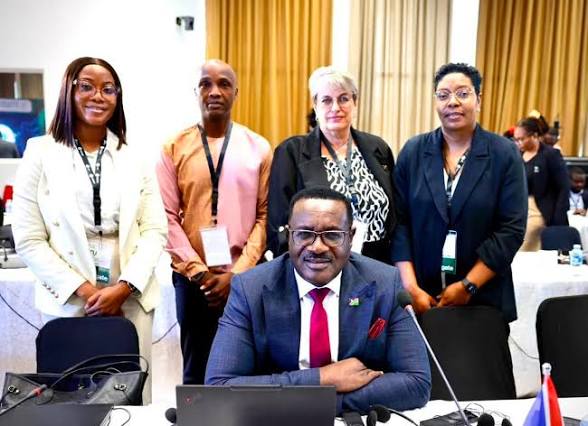
Namibia has reaffirmed its commitment to Africa’s digital transformation agenda at the 7th Ordinary Session of the African Telecommunications Union Conference of Plenipotentiaries, currently underway in Abuja, Nigeria, with the Communications Regulatory Authority of Namibia (CRAN) joining 52 African member states for what is the ATU’s highest-level decision-making gathering.
The ministerial summit, scheduled for the 23rd to the 24th of July 2026, brings together telecommunications ministers, ICT regulators, industry leaders, academics, and development partners to chart Africa’s digital future for the next four-year cycle. Delegates are expected to adopt the ATU’s 2027 to 2031 strategic plan and budget, elect a new Secretary-General, and determine the composition of the Administrative Council.
Namibia’s participation builds on its active engagement across multiple continental digital forums in 2026. The Communications Regulatory Authority of Namibia participated in the ITU Regional Development Forum for Africa in Victoria Falls in May, where the five-day gathering brought together governments, regulators, industry leaders, and development partners to discuss the continent’s digital priorities and strategies for advancing meaningful, affordable, and inclusive connectivity. CRAN’s engagement was aimed at ensuring Namibia remains actively involved in regional and global telecommunications discussions while contributing to Africa’s broader digital transformation agenda.
Separately, Namibia has been in direct discussions with the ITU’s Telecommunication Development Bureau on deeper cooperation for youth digital innovation, with ITU Bureau Director Dr. Cosmas Luckyson Zavazava reaffirming the Bureau’s readiness to work closely with Namibia’s Ministry to identify practical areas of cooperation promoting digital innovation and expanding opportunities for Namibian youth.
The Bigger Picture in Abuja
The Abuja conference is the most consequential African telecommunications gathering of 2026, feeding directly into the ITU Plenipotentiary Conference in Doha, Qatar later in November, where Africa hopes to arrive with a unified position on spectrum harmonisation, artificial intelligence governance, cybersecurity, digital identity, and universal connectivity.
Nigeria’s Communication Commission (NCC) Executive Vice Chairman Dr. Aminu Maida, who opened the Conference Preparatory Committee ahead of the main conference, urged African nations to arrive at Doha with positions that are coherent and technically compelling, calling for greater alignment and stronger commitment to sustained technical participation in ITU processes. “Africa must prepare together, work together between meetings and arrive at a global forum from positions that are both coherent and technically compelling,” he said.
Maida also called on African experts to sustain engagement in ITU study groups and technical committees: “Our objective is not to resist global standards. It is to help shape standards that are globally sound and sufficiently informed by African realities.”
For Namibia, participation in these processes reflects a domestic digital agenda that has gathered real momentum. Namibia’s digital affairs minister has set clear national priorities: creating a more digitally literate nation, increasing internet access among Namibians, and preparing the country for the Fourth Industrial Revolution. The ATU conference in Abuja, and the ITU Plenipotentiary that follows in Doha, are the international forums where those national priorities connect to the continental and global frameworks that shape spectrum policy, investment flows, and digital governance for years to come.
Africa Presents is a Pan-African digital magazine and monthly publication covering politics, business, economy, culture, tech, and the stories shaping Africa and its diaspora. Visit africapresents.com and follow @AfricaPresents for daily coverage and monthly themed magazine editions.






Leave a comment