

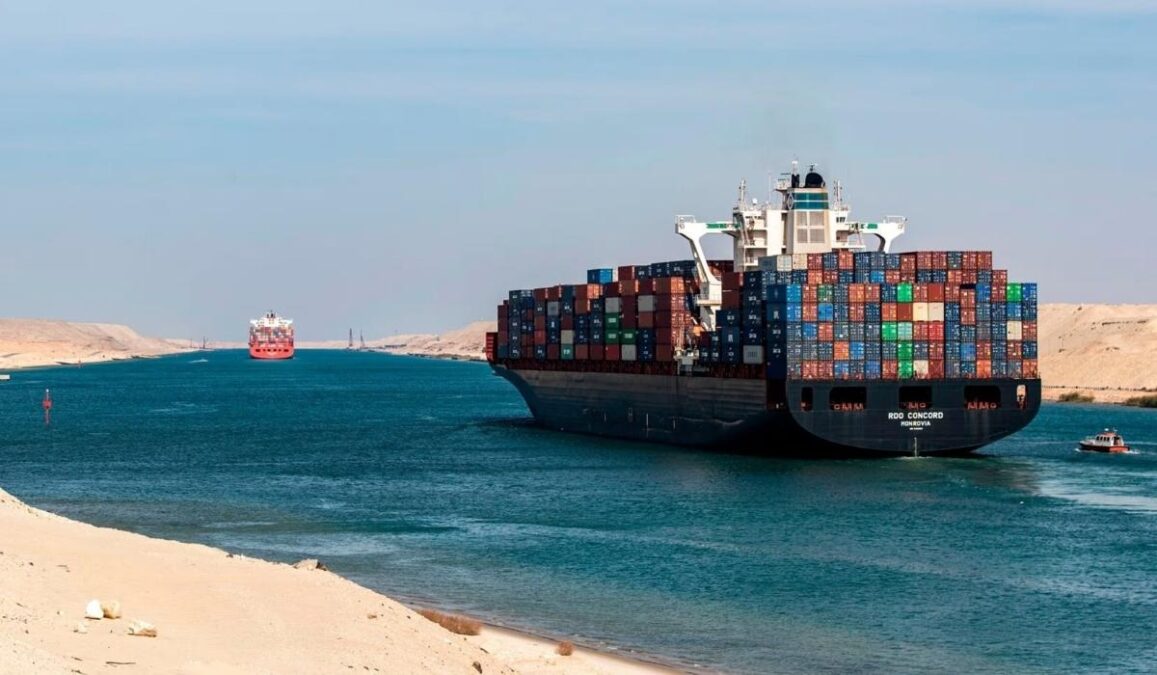
A.P. Moller-Maersk has restored its WAF6 service to the Red Sea corridor, a move that will significantly shorten transit times between the Middle East, the Mediterranean and West Africa and mark another step in the carrier’s gradual return to the trans-Suez route.
The WAF6 service, which is operated solely by Maersk, connects the Middle East and Mediterranean with major West African ports. The company has now re-routed the service to transit via the Red Sea between Salalah and the western Mediterranean, after previously diverting vessels around the Cape of Good Hope due to security concerns in the region.
According to Maersk, the change cuts the South African corridor transit in half, offering Nigerian and other West African shippers a faster alternative that avoids the lengthy detour around southern Africa. The shipping group has described the move as part of a “gradual return to the trans-Suez corridor” as conditions in the Red Sea stabilise.
The return of the WAF6 service to the Red Sea follows similar adjustments to other Maersk routes. Earlier in 2026, the company restructured its MECL service to resume trans-Suez routing, reporting average transit time improvements of seven days westbound and up to 14 days eastbound. Maersk and Hapag-Lloyd also reactivated their Gemini joint network’s AE15 service, which connects Asia, the Mediterranean and Europe, reducing passage duration by about four weeks.
Vessels had previously been diverted around the Cape of Good Hope in response to attacks on merchant ships in the southern Red Sea, adding weeks of delay for shippers serving West Africa and Europe. The latest routing change reflects Maersk’s assessment that security conditions have improved sufficiently to justify a phased return to the shorter Suez route, while maintaining contingency plans should the situation deteriorate.
For customers in West Africa, the shift means faster access to cargo from the Middle East and Mediterranean, lower inventory costs and reduced exposure to delays associated with the longer southern African route. The company says the change will improve schedule reliability and equipment flows across its global network, enabling shippers to plan production and delivery with greater confidence.
Maersk has indicated that further Red Sea transits may be restored in the coming months as part of its broader Q3–Q4 2026 network adjustments, with additional services expected to resume Suez routing subject to ongoing safety assessments.
Africa Presents is a Pan-African digital magazine and monthly publication covering politics, business, economy, culture, tech, and the stories shaping Africa and its diaspora. Visit africapresents.com and follow @AfricaPresents for daily coverage and monthly themed magazine editions.






Leave a comment