

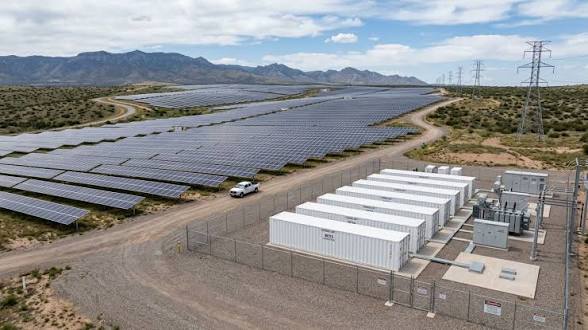
The Emerging Africa and Asia Infrastructure Fund has committed a $30 million senior secured corporate loan to Hassan Allam Utilities to support the development of the Minya project in Egypt, a 1,000-megawatt solar photovoltaic plant paired with a 660-megawatt-hour battery energy storage system that, upon completion, is expected to become one of the single largest solar assets in Africa.
The project is being co-developed with Infinity Power, a joint venture between UAE’s Masdar and Egypt’s Infinity, and will deliver large-scale solar generation while enhancing national grid stability, providing affordable and reliable power for businesses and communities.
The transaction marks a significant expansion of the partnership between EAAIF and Hassan Allam Utilities, following an initial $40 million facility signed in November 2024 to support renewable energy projects. As the sole lender with a primary claim in the transaction, EAAIF is helping de-risk the project while providing long-term capital to accelerate renewable energy deployment.
Egypt’s Clean Energy Moment
Egypt is the third most populous country in Africa and currently relies on fossil fuels for 89 per cent of its electricity. To meet population-driven increases in demand, the government’s Integrated Sustainable Energy Strategy targets a 42 percent increase in renewable power generation by 2030.
The Minya project sits squarely within that ambition, and the EAAIF’s backing provides the kind of long-term commercial debt that makes such projects bankable. The battery energy storage component is particularly significant: by pairing solar generation with storage, the project addresses one of the continent’s most persistent infrastructure challenges, ensuring that power generated during peak solar hours is available when demand is highest, rather than being lost.
The financing also marks an important step in EAAIF’s strategic expansion across the Middle East, North Africa, and Asia, reinforcing its focus on supporting regional infrastructure developers capable of delivering large-scale sustainable energy projects.
A Model for the Continent
Martijn Proos, Co-Head of Emerging Market Alternative Credit at Ninety One, the fund manager of EAAIF, framed the deal in terms that extend well beyond Egypt. “Scaling innovative financing structures alongside battery storage infrastructure strengthens grid stability and underpins sustainable growth. This transaction also provides a model for other emerging markets and developing economies seeking to decarbonise while creating high-quality green jobs.”
According to the African Development Bank, Africa faces an annual infrastructure financing gap of $68 billion to $108 billion, making blended finance and private-sector participation increasingly important for delivering large-scale energy projects. The Minya deal demonstrates how that gap can begin to be closed: through commercial debt structures that de-risk projects sufficiently to attract private capital, without relying on grant funding or aid.
Egypt currently generates significant renewable capacity, and the Minya project, once complete, will add meaningfully to that base. For a continent still running largely on fossil fuels, it is the kind of deal that matters.
Africa Presents is a Pan-African digital magazine and monthly publication covering politics, business, economy, culture, tech, and the stories shaping Africa and its diaspora. Visit africapresents.com and follow @AfricaPresents for daily coverage and monthly themed magazine editions.






Leave a comment