

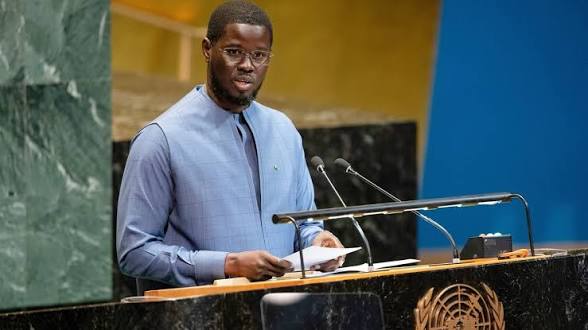
Senegal’s Constitutional Court has struck down a bill passed by parliament that sought to limit the powers of the president and strengthen those of the National Assembly, finding it to be “contrary to the Constitution.” The ruling is the latest development in an increasingly bitter power struggle between President Bassirou Diomaye Faye and his former prime minister Ousmane Sonko, whom Faye fired in May and who subsequently won the presidency of the National Assembly.
The bill was passed by an overwhelming majority of the National Assembly on the 29th of June after heated exchanges in the chamber, with opposition MPs staging a walkout in protest. President Faye referred the legislation to the court rather than sign it into law, which found it unconstitutional and struck it down entirely.
What the Bill Contained
The reform included several key provisions: it would have prohibited a sitting president from serving as leader of a political party, a move widely seen as targeted at President Faye, who remains a Patriotes Africains du Sénégal pour le Travail, l’Éthique et la Fraternité (PASTEF) member; it would have barred a president from signing certain acts into law during the period between a presidential election and the inauguration of the president-elect; and it would have expanded the powers of parliamentary inquiry committees.
The text also proposed the creation of a Constitutional Court to replace the current Constitutional Council, with nine members instead of the current seven, and would have required the government to inform the legislature of agreements related to the exploitation of natural resources.
The Faye-Sonko Fracture
The bill was tabled by the PASTEF party, led by Ousmane Sonko, the speaker of the National Assembly who was dismissed from his role as prime minister by President Faye last month, triggering a political firestorm in a country long seen as a regional bastion of democracy.
Faye and Sonko came to power together in 2024 on the promise of sweeping reforms, but their alliance fractured over several months, with Sonko openly criticising Faye for his handling of Senegal’s debt problems. The opposition viewed the bill as political revenge by Sonko, who retains significant influence over the parliamentary majority through PASTEF 130 of the National Assembly’s 165 seats.
The constitutional crisis has drawn intense public attention in a country that Senegal’s 2024 election had positioned as a model of democratic resilience on the continent. Police fired tear gas and detained several opposition leaders and activists during protests outside the National Assembly when the bill was originally passed.
What Comes Next
With the Constitutional Court’s ruling invalidating the bill, the immediate political question is what Sonko’s PASTEF-controlled National Assembly does next. President Faye had announced he would put the bill to a national referendum had the court allowed it to stand. That option is now closed.
The planned creation of a new presidential party by Faye could significantly reshape Senegal’s political landscape and redefine alliances within the country’s ruling establishment, suggesting the confrontation between the two men who once shared power is far from resolved. Senegal’s democratic institutions have, for now, held. Whether the political forces now pulling in opposite directions will respect that outcome is the question the country’s coming months will answer.
Africa Presents is a Pan-African digital magazine and monthly publication covering politics, business, economy, culture, tech, and the stories shaping Africa and its diaspora. Visit africapresents.com and follow @AfricaPresents for daily coverage and monthly themed magazine editions.







Leave a comment