

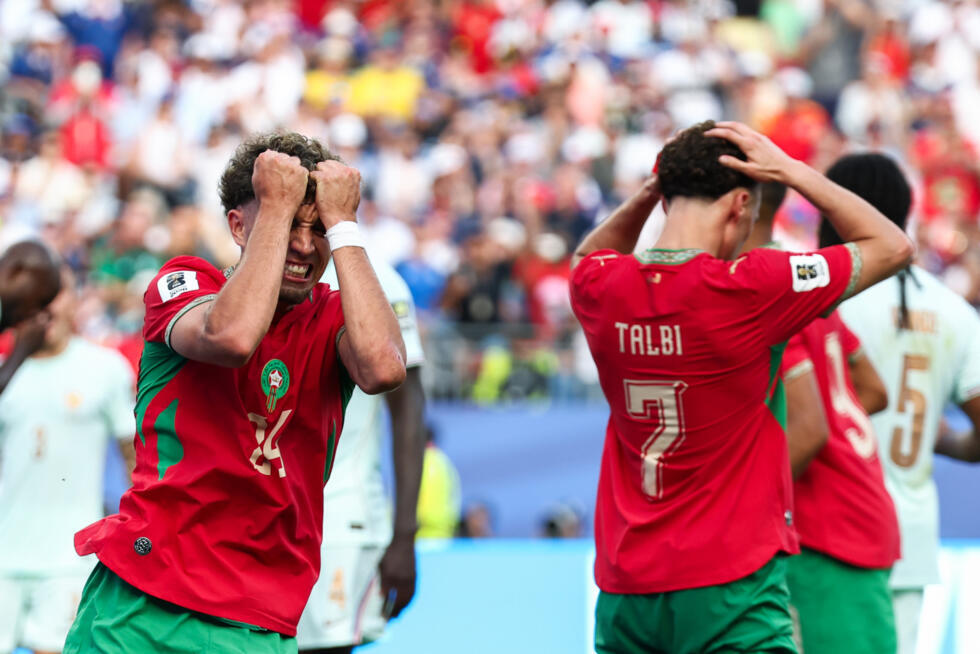
France eliminated Morocco 2-0 in the World Cup quarter-finals in Foxborough, Massachusetts on Thursday, ending Africa’s last remaining presence in the tournament and ending the Atlas Lions’ dream of becoming the first African nation to reach a World Cup semi-final in successive tournaments. Kylian Mbappé scored one goal after missing a first-half penalty and set up another for Ousmane Dembélé as France advanced to a third successive World Cup semi-final.
Morocco barely laid a glove on their opponents in the first half, with an expected goals figure of just 0.04 according to Opta Stats. The Atlas Lions improved after the break, with Brahim Díaz and Azzedine Ounahi making early bursts into the penalty area, but goalkeeper Mike Maignan was not seriously tested. Mbappé’s curling shot into the far corner gave him his eighth goal of the tournament in the 60th minute, and Dembélé doubled the lead six minutes later with a low drive past Yassine Bounou.
The Match
France dominated from the first whistle, preventing Morocco from taking a single shot in the first half. In the 25th minute, Mbappé secured a penalty after being tackled near the Morocco goal, but Bounou dived low to his right to save the resulting spot-kick. It was one of the few moments Morocco could take genuine satisfaction from a bruising first half.
France’s dominance was reflected in the statistics: 3.04 expected goals to Morocco’s 0.14, and 22 attempts to Morocco’s five across the full 90 minutes. It was a performance that reminded the world why France arrived in North America as one of the tournament’s leading favourites, and why they remain on course for a third World Cup title.
Mbappé, who matched Lionel Messi with eight goals at this tournament, is now the only player to record 10 or more direct goal involvements at two different World Cups, and leads the Golden Boot race heading into the semi-finals.
What Morocco Leave Behind
Morocco departs the 2026 World Cup having written a chapter in African football history that stands on its own terms, independent of Thursday’s result. In reaching the quarter-finals, the Atlas Lions became the first African team to qualify for the last eight in successive World Cups. They beat the Netherlands on penalties in the Round of 16, topped a group containing Portugal, beat New Zealand, and gave France a nervy first half before the dam broke.
Morocco’s achievement is partly the result of deliberate national investment. The king made a decision to invest in football and use it as soft power, producing a generation of players who are choosing Morocco over European national teams. Eighteen-year-old midfielder Ayyoub Bouaddi, born in France to Moroccan parents and courted by the French national team, chose Morocco and played in this tournament. He is a symbol of a generational shift in African football identity.
The investment and buy-in from the Moroccan government is evident, and their talented youngsters will only continue to grow in maturity and stature. With Morocco co-hosting the 2030 World Cup, the prospects for the next chapter look bright.
Africa’s Tournament
Morocco were the last of nine African nations who reached the Round of 32 at this expanded 48-team tournament, a continental record. Ghana, Egypt, Algeria, Senegal, Ivory Coast, South Africa, Cape Verde, and DRC all played their part in Africa’s best-ever collective World Cup performance. Morocco carried the continent’s hopes the furthest. They did so with football, with identity, and with a generation of players building toward something bigger than any single result.
The 2030 World Cup comes to Casablanca. What happens there will write the next line of this story.
Africa Presents is a Pan-African digital magazine and monthly publication covering politics, business, economy, culture, tech, and the stories shaping Africa and its diaspora. Visit africapresents.com and follow @AfricaPresents for daily coverage and monthly themed magazine editions.






Leave a comment