

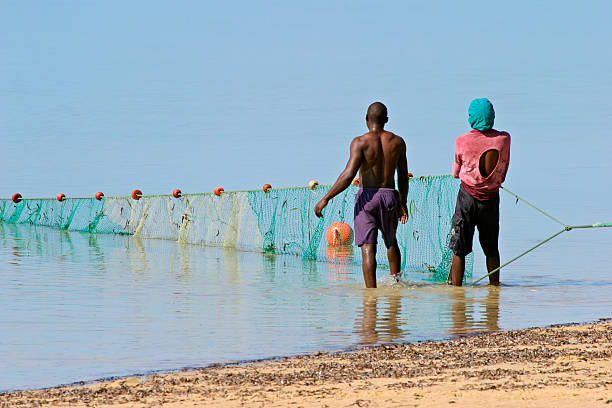
Along the coastlines of West Africa, from Sierra Leone’s Sherbo Island to the fishing suburbs of Dakar, a quiet crisis has been unfolding for more than a decade. Catches are down. Nets are being cut. Boats are being rammed. And the men whose livelihoods depend on the sea are pointing to the same culprit: foreign trawlers, operating at night, inside exclusion zones that exist on paper but are rarely enforced in practice.
A $10 Billion Problem
West Africa remains the global epicentre for illegal fishing. An estimated 40 per cent of the world’s unlicensed catch can be traced to its waters, according to a 2024 global report, costing West African nations a combined $10 billion in lost revenues and threatening the food security of millions. Illegal fishing costs Senegal alone nearly $300 million annually, with more than 1.3 million people who work in the country’s fisheries sector directly exposed to the fallout.
Steve Trent, CEO of the Environmental Justice Foundation, says the vast majority of the offending vessels are from China. “In the past, we’ve seen South Korean vessels there, we’ve seen Taiwanese, we see European vessels there doing bad things. But now when you look across that region, it is overwhelmingly Chinese.”
In Ghana, the picture is equally stark. Chinese-owned vessels continue to threaten fisheries and livelihoods in Ghanaian waters. A new investigation found that Chinese industrial trawlers in Ghana are modifying their nets to deliberately and systematically target small, juvenile fish. The average annual income of Ghana’s 100,000-plus artisanal fishermen has dropped by as much as 40 percent per canoe over the past 15 years.
The Tactics Being Used
In Senegal and around West Africa, foreign trawlers employ an array of illegal tactics, including fishing with explosives, using illegally sized nets, and committing “saiko,” the illegal transshipment of fish at sea. They also engage in bottom trawling, dragging a huge net along the ocean floor, indiscriminately scooping up all manner of marine life, killing juvenile fish and destroying ecosystems.
Between 53 and 60.5 per cent of all fish landed by trawlers in Ghana are bycatch, far exceeding the 15 per cent allowance authorised by the Ghanaian government. Eight of the world’s top ten companies engaged in illegal fishing are from China.
Beijing’s Response
The Chinese Chamber of Commerce in Sierra Leone did not respond to requests for comment. However, recent allegations of Chinese illegal fishing in Latin American waters prompted a blanket denial from the Chinese Foreign Ministry, which stated: “China is a responsible fishing nation, strictly enforcing the regulation of its distant-water fishing activities.”
Trent from the EJF rejected that framing. “It’s simply not credible for them to carry on in this way. China, to date, still is not doing nearly enough to control its fleet. In fact, I would say they’re enabling it, through subsidies, through a lack of oversight and control.”
What Governments Are Doing
Ghana’s President John Mahama signed the Fisheries and Aquaculture Act in November 2025, expanding the inshore exclusive zone reserved for artisanal fishers from six nautical miles to twelve. Senegal has published up-to-date licence lists and vessel registries online and signed a memorandum of understanding with Spain on maritime fisheries in March 2026.
The solutions, experts say, require more than national policy. Trent argues the fix needs to come from better tracking of commercial vessels and increased international pressure on Beijing, including from consumers. “You can choose — do you want a product that’s been fished illegally, probably unsustainably, stolen from a poor third-party nation?”
For a person like Ibrahima Mar, an artisanal fisherman in Rufisque, Senegal, the damage of the past 15 years is deeply personal. The fish are gone. His livelihood is under threat. And one of his sons, who set out for Europe in search of work when the catches dried up, has not been heard from since. His story is not exceptional. It is the story of a coastline.
Africa Presents is a Pan-African digital magazine and monthly publication covering politics, business, economy, culture, tech, and the stories shaping Africa and its diaspora. Visit africapresents.com and follow @AfricaPresents for daily coverage and monthly themed magazine editions.







Leave a comment