

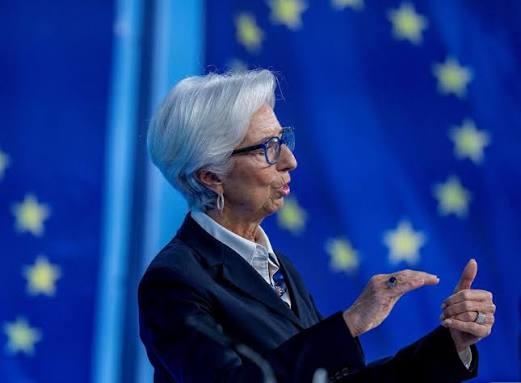
When Christine Lagarde speaks about central bank independence, she is not speaking theoretically. As former Managing Director of the IMF and current president of the European Central Bank, she has watched the system from its highest seats. Her warning, delivered yesterday in Phnom Penh, Cambodia, was direct.
“The question is no longer simply how to guarantee independence,” she told an audience of francophone central bankers. “It is how to protect it when it is put to the test.”
The context for that warning is impossible to ignore. US President Donald Trump has spent months publicly attacking Federal Reserve Chair Jerome Powell for refusing to cut interest rates at the pace his administration demands. The Department of Justice launched a criminal investigation into a renovation of the Fed’s headquarters, widely interpreted as political retaliation for Powell’s resistance. In January, the heads of the world’s leading central banks issued a joint statement of solidarity: “The independence of central banks is a cornerstone of price, financial and economic stability in the interest of the citizens that we serve.”
For Africa, this is not a distant geopolitical drama. Central bank independence on the continent has historically been contested. Governments facing fiscal pressure or electoral cycles have repeatedly leaned on monetary institutions to hold rates low or finance deficits. The consequences, paid by ordinary citizens in the form of inflation and currency depreciation, are well documented.
A new IMF working paper published this year found that politically motivated transitions at central banks are directly associated with higher and more persistent inflation, and with a measurable decline in institutional credibility. When the world’s most powerful government demonstrates that a central bank can be publicly bullied, that precedent does not stay in Washington. It travels.
Lagarde put the principle plainly: “To best serve the public interest, a central bank must be close enough to the state, but independent enough to resist the pressures of the moment.”
The institutions that protect the value of money require active defence. Africa cannot afford to treat that lesson as someone else’s problem.
Africa Presents is a Pan-African digital magazine and monthly publication covering politics, business, economy, culture, tech, and the stories shaping Africa and its diaspora. Visit africapresents.com and follow @AfricaPresents for daily coverage and monthly themed magazine editions.







Leave a comment