

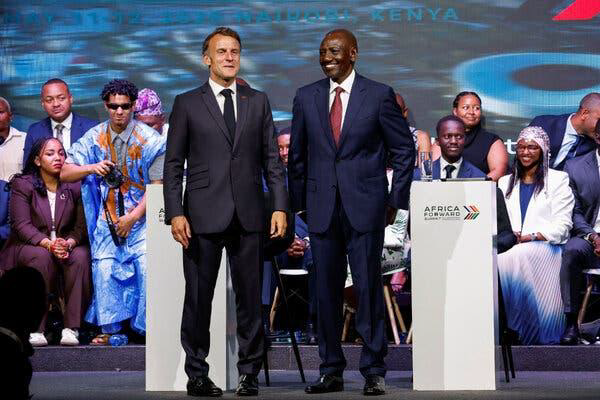
On 11th and 12th May 2026, the Kenyatta International Convention Centre in Nairobi became the meeting point for a continent making its case to the world. The Africa Forward Summit brought together heads of state and government, multilateral institutions, global investors and private sector leaders around a shared agenda: repositioning Africa at the centre of global growth through a new model of partnership based on co-investment, sovereign equality and African-led financial solutions.
Co-hosted by Kenyan President William Ruto and French President Emmanuel Macron, the inaugural summit drew over 1,500 business leaders, entrepreneurs and investors alongside African heads of state with UN Secretary-General António Guterres also in attendance. The message from the opening session was direct: Africa is not asking to be helped. It is demanding to be heard.
A New Financial Architecture
The summit’s most concrete outcome was its backing of the New African Financial Architecture for Development — NAFAD. The African Development Bank Group’s President, Dr Sidi Ould Tah, presented NAFAD as an African-led response to one of the continent’s most pressing structural constraints: the inability to transform abundant liquidity into investable capital at scale. Africa’s challenge, he stressed, is not a lack of capital — it is a lack of mechanisms capable of transforming risk and crowding in long-term investment.
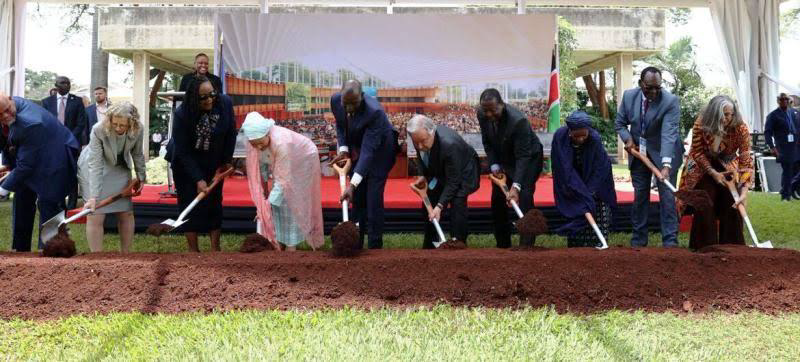
At the centre of it is ATIDI, the Nairobi-based pan-African investment and credit insurer. President Ruto called for its recapitalisation as “a critical pillar of the new Africa financial architecture for development,” while President Macron announced France’s intention to support ATIDI’s scaling and endorsed a continental first-loss guarantee strategy — describing the initiative as part of “a new financial paradigm” capable of advancing Africa’s prosperity and strategic autonomy.
Alongside this, leaders pushed for fairer representation inside the IMF, calling for “an adequate realignment of quota shares in favour of the most underrepresented countries,” and renewed calls for UN Security Council reform in line with the African Union’s Ezulwini Consensus.
From Raw Materials to Real Value
The Nairobi Declaration left no ambiguity about what Africa wants its economic future to look like. “We commit to supporting a transition from extractive economic models toward value addition, manufacturing and sustainable production systems,” the declaration states — a line that doubles as both a policy commitment and a rebuke of the status quo.
Energy and industrialisation featured prominently, with leaders pledging to promote green industrialisation through renewable energy, geothermal, hydropower, waste-to-energy and nuclear power, and committing to strengthen regional energy markets to support industrial growth and job creation. The AfCFTA was repeatedly anchored as the vehicle through which these ambitions become regional reality.
Youth, Security, and the Bigger Picture
The summit recognised Africa’s youth as a strategic asset, with leaders committing to expanding education, training and innovation ecosystems to create jobs and support entrepreneurship. On security, French and African leaders reaffirmed support for African-led peace operations and backed implementation of UN Security Council Resolution 2719 to ensure “predictable and sustainable funding” for AU-led missions — a pointed signal that Africa intends to police its own affairs, on its own terms and with guaranteed resources.

What Happens Next
The Nairobi Declaration closes with a call to move from commitment to action. That is, of course, where every summit ends. The difference this time is the mood: African leaders are no longer petitioning a system that was built without them. They are arriving with frameworks, institutions, and numbers and demanding that the architecture bend.







Leave a comment