

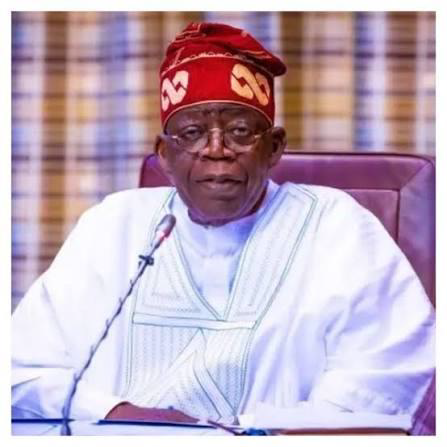
Nigeria’s president arrived in Kigali with a message the continent has been circling for decades, and this time, he said it plainly.

“We don’t want scavengers. We don’t want extractors,” Bola Ahmed Tinubu declared at the Africa CEO Forum on Thursday, during a presidential panel that put economic nationalism front and centre. The line landed because it named something real: Africa keeps supplying the raw material while someone else captures the value. That arrangement, Tinubu argued, is over.
The Kigali remarks came days after he made the same case in Nairobi at the Africa Forward Summit, where he joined over 30 African leaders to push for reform of the international financial architecture. Two summits, one consistent demand: Africa must stop outsourcing its future.
The Numbers Behind the Anger
Nigeria will spend approximately $11.6 billion on debt service in 2026, nearly half of projected revenue. Tinubu’s point was that every dollar haemorrhaging out of the treasury in punitive interest is a dollar that never reached a steel plant, a textile mill, or a young engineer’s training. “Nigeria is not asking for charity. We are demanding a financial system that intentionally enables Africa to industrialise, to process its own minerals, refine its own crude oil, manufacture its own pharmaceuticals, and compete fairly in global markets,” he said.

The Threat to Unity
The harder problem is that Africa’s collective ambitions are being quietly picked apart. Political economist Phumlani Majozi warns that the US, China, and the EU increasingly prefer bilateral deals with individual resource-rich states over broader continental frameworks — a strategy that weakens the AfCFTA’s bargaining power and risks turning African nations into “vassal markets” where critical minerals and digital infrastructure are allocated according to foreign strategic interests, not African development needs.
Tinubu’s answer is collaboration over fragmentation “not working in silos, but in collaboration with one another using what we have.” Gabonese President Oligui Nguema went further, pointing to European integration as the model: deliberate, collective, built on the understanding that pooled strength beats individual compromise.
The Bottom Line
African leaders in Kigali and Nairobi signalled clearly that the continent intends not merely to participate in the next global economic order, but to help define it.
Whether that ambition holds when the bilateral offers arrive is the real test. Africa has the minerals, the coastlines, the land, and a youthful population that is, in Tinubu’s words, “restless and not ready to take excuses.” The continent does not have a resource problem. It has a retention problem. And the leaders gathering this week in Rwanda and Kenya are betting that naming it loudly enough is the first step to fixing it.







Leave a comment