


Africa’s fintech scene is exploding, and is pushing past quick mobile money transfers. Young innovators across the continent are pushing boundaries, expanding into credit, lending and a whole suite of financial services that could reshape how we bank, borrow and build wealth.
According to the latest African Fintech Report 2026 from McKinsey & Company, released today, Africa’s fintech market hit a whopping $15 billion in revenue last year, a 25% jump from 2024. That’s fueled by over 1,200 startups, with Nigeria, Kenya, South Africa and Egypt leading the charge. The major factor here is a massive shift beyond payments into high-growth areas like credit (projected at 30% CAGR through 2030), savings, insurance, and investments.

Why This Matters Now: Youth power in conjunction with Technology.
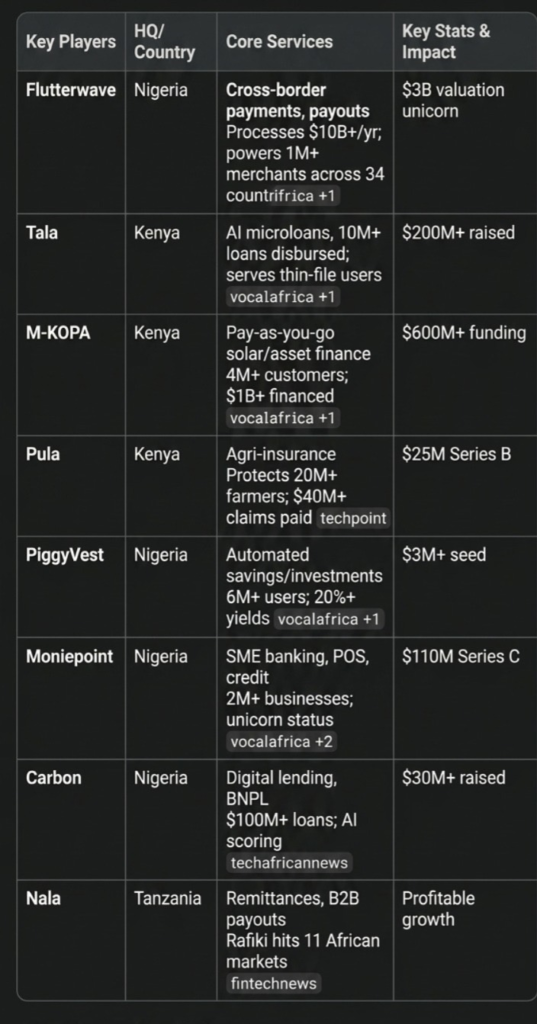
Young Africans—Gen Zers and millennials are at the heart of this. With over 60% of the continent’s 1.4 billion people under 25, smartphone penetration at 55% (and climbing), and banking access still lagging at just 45%, fintech is filling the gap. Platforms like Nigeria’s Carbon and Kuda, Kenya’s Tala and Branch, and South Africa’s Yoco aren’t just apps; they’re lifelines for gig workers, student hustlers and small business owners scraping by without traditional banks.
The report spotlights “embedded finance” as the next big wave: think buy-now-pay-later (BNPL) woven into e-commerce like Jumia or Takealot, or micro-loans popping up in ride-hailing apps. Credit scoring powered by AI and alternative data (phone usage, utility payments) is unlocking loans for the unbanked; $50 billion in untapped potential, says McKinsey.
Hotspots and Hurdles
• West Africa (Nigeria-heavy): Dominates with 40% market share, thanks to payments giants like Flutterwave and Paystack. Credit startups raised $500M in 2025 alone.
• East Africa (Kenya pioneer): M-Pesa’s legacy evolves into full-stack services; remittances and savings apps lead.
• Southern & North Africa: South Africa’s regulatory edge boosts insurance fintechs; Egypt’s Fawry eyes regional expansion.
Howeve, some challenges have been encountered, Regs are patchy (shoutout to sandbox pilots in Nigeria and Rwanda), cyber threats loom and infrastructure gaps slow rural rollout. But with $3B in VC funding last year and partnerships from global players like Visa and Mastercard, the momentum is unstoppable.
Jobs, Wealth, and Africa’s Future
For Africa’s youth, this isn’t just a hype, it is an opportunity. Fintech could create 10 million jobs by 2030, from coders in Lagos to agents in Accra. Imagine turning your side hustle into a funded startup or accessing credit to launch that agritech venture. As McKinsey notes, “Africa’s fintechs are poised to drive inclusive growth, potentially adding $200B to its GDP.”
The report urges governments to fast-track regs, invest in digital ID (like Ghana’s), and boost financial literacy. Fintech leaders are also encouraged to scale responsibly, prioritize data privacy, and collaboration across borders utilizing the AfCFTA.
Africa’s fintech isn’t a trend, it is our ticket to financial independence.
Source: McKinsey African Fintech Report 2026. Full report here.







Leave a comment