

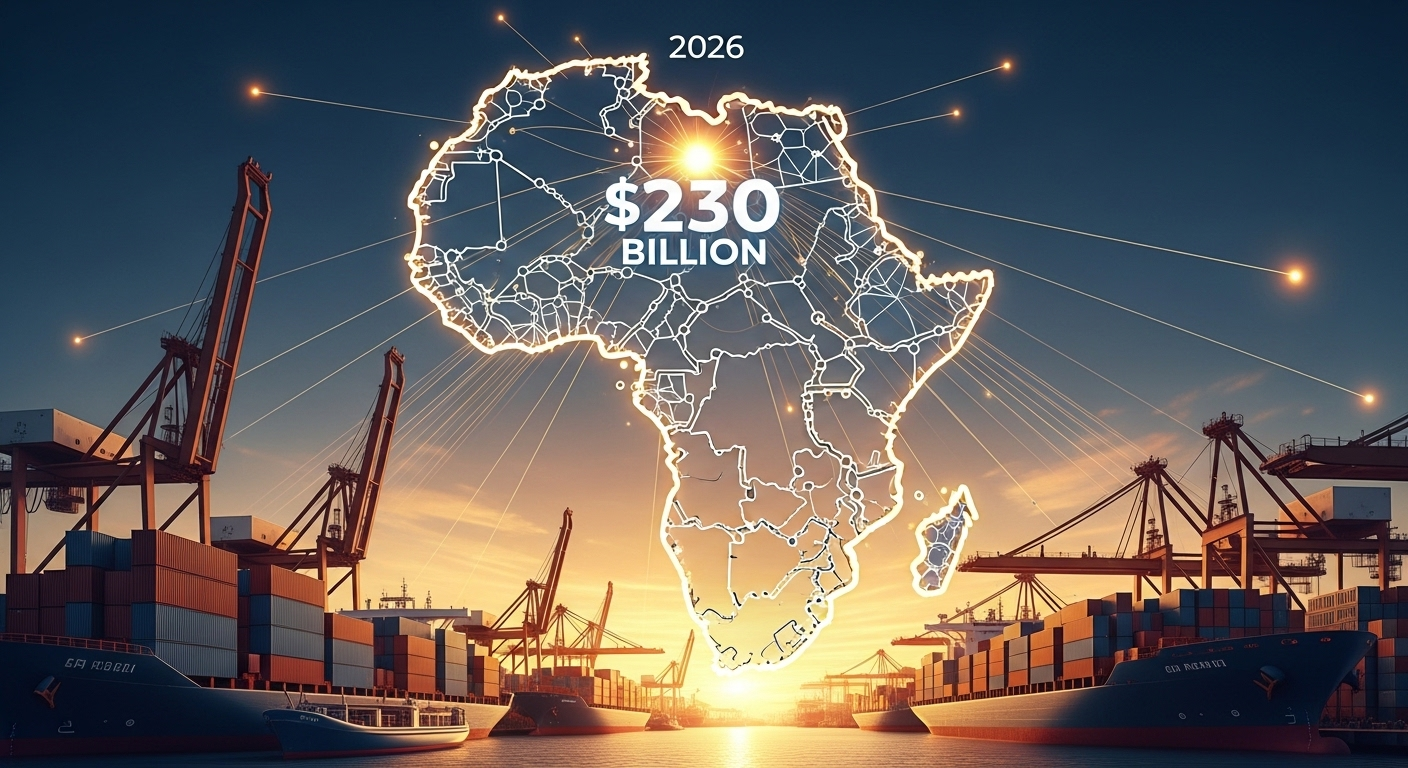
For too long, Africa has been known more for what it sells to the rest of the world than for the trade it does within itself. But in 2026, something different is happening: Africans are starting to buy, sell, and build more with each other than ever before.
By the end of this year, intra‑African trade is projected to hit about $230 billion, up from roughly $210 billion in 2025 – a 10% jump in one year.
Why this Matters
At first glance, $230 billion sounds like a lot. But compared to the continent’s total trade of about $1.4 trillion, it still only makes up around 15–16% of what Africa trades overall. To put this plainly, Africa still trades more with the world than with itself.
But the trend is shifting. The projected $230 billion marks a meaningful step toward greater self‑reliance. Instead of exporting raw minerals and crops to be processed elsewhere, African producers are increasingly selling semi‑processed goods, branded foods, garments and manufactured items to other African countries.
For young people, this means more chances to build brands, create logistics jobs, and set up digital platforms that connect buyers and sellers across borders, all from within the continent.
AfCFTA: The Engine of the Jump
The biggest driver of this growth is the African Continental Free Trade Area (AfCFTA), the world’s largest free‑trade area by number of countries. Designed to link over 1.4 billion people and a combined GDP of more than $3 trillion, the AfCFTA is slowly turning the idea of a single African market into something real.
Under the AfCFTA, countries are committing to eliminate up to 90% of tariffs on intra‑African trade, along with rules that make it easier for businesses to source materials from one African country and sell the finished product in another. That’s why you’re seeing new manufacturing hubs, agri‑processing plants, and regional‑distribution networks popping up from West to East Africa.
From a youth perspective, this is a job‑creation blueprint: AfCFTA is not just about “big deals” between governments; it’s about the space it opens for startups, SMEs and the gig‑economy players to move goods, data, and services across borders more affordably..
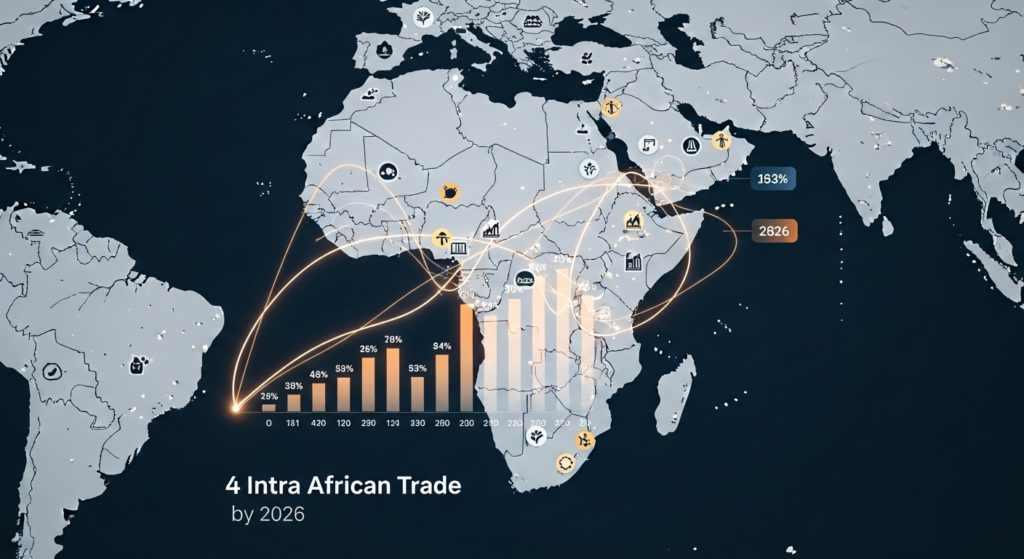
PAPSS: Paying Each Other Faster
Even the best deal means nothing if money can’t move. Africa’s old cross‑border payment system was slow, expensive, and heavily dependent on foreign currencies, which kept costs high for small traders.
That’s where the Pan‑African Payment and Settlement System (PAPSS) comes in, which is effectively a continent‑wide payment rail that lets African banks and businesses settle trades directly in local currencies, bypassing the need for long‑distance dollar conversions.
Analysts estimate that PAPSS is already cutting FX settlement costs by about 20–30%, making it easier and cheaper for young entrepreneurs, cross‑border traders, and even small‑scale farmers to experiment with selling to other African markets.
For a young content creator, cab driver, student‑run business, or influencer‑owned brand, that 20–30% saving on fees can be the difference between a profitable side hustle and a side‑hustle that never scales.
Who Is Benefiting from this?
The $230 billion wave is not just flowing through big corporations. Three groups are already seeing the biggest impact:
• Manufacturers and agri‑processors: Factories and processing plants in countries like Nigeria, Kenya, Ghana, South Africa, and Côte d’Ivoire are exporting more packaged foods, textiles, and construction materials within Africa. This creates demand for both skilled technicians and young workers in logistics, packaging, and quality control.
• Farmers and rural entrepreneurs: As more food is processed and sold across borders, AfCFTA‑linked trade routes help small‑scale farmers access bigger regional markets instead of relying on local middlemen.
• Digital and gig‑economy workers: Fintech platforms, delivery apps, and logistics startups are expanding to plug into the growing flow of goods and services. For a young coder, marketer, or rider, more intra‑African trade means more platforms to work for, more clients, and more opportunities to build skills.
Regional Hubs to Watch out for
Several corridors are emerging as the backbone of the $230 billion picture:
• East Africa: The Kenya–Uganda–Rwanda–Tanzania region is becoming a fast‑moving corridor for manufactured goods, agri‑products, and ICT‑linked services.
• West Africa: Nigeria, Ghana, Côte d’Ivoire, and Senegal are the core of a growing manufacturing and consumer‑goods axis, with Nigeria’s industrialisation push and AfCFTA‑aligned policies driving cross‑border trade.
• Southern and North Africa: South Africa remains a key exporter of manufactured goods, while Egypt is positioning itself as a gateway between African and global markets, especially in energy and industrial goods.
For young Africans, these hubs aren’t just “places on a map”, they’re job markets of the future, connected by better roads, rails, and digital platforms.
What This Means for Young Africans
In practical terms, the rise of intra‑African trade to $230 billion by 2026 means:
• More regional job markets: You no longer have to think only in terms of “what can I find in my city?” but “what can I offer to another African country?”
• More room for startups and brands: Affordable cross‑border payments and lower tariffs make it easier for youth‑led brands to test demand in neighbouring countries.
• More leverage in global talks: As Africa trades more within itself, it becomes less dependent on any single external partner, giving future leaders (like today’s youth) stronger bargaining power in global negotiations.







Leave a comment