

For centuries, Africa’s story has been told in fragments, often written by outsiders, edited by empire and taught through the narrow lens of conquest and “civilisation.” Yet history has a stubborn habit of resurfacing, especially when the voices it once silenced grow louder.
That is precisely what happened when the African Union recently adopted a landmark resolution describing slavery, deportation and colonial rule as genocide and crimes against African peoples. The decision, reached during the organisation’s 39th summit in Addis Ababa, is more than a diplomatic gesture. It is a statement about memory, justice and Africa’s right to define its own historical truth.
Naming the Past for What It Was
The transatlantic slave trade and colonial conquest reshaped Africa in ways that remain visible today. Between the 15th and 19th centuries, millions of Africans were forcibly transported across the Atlantic, while countless others were displaced, enslaved, or killed within the continent itself.
The colonial rule that followed was not simply political administration. It reorganised societies, dismantled existing institutions
and redirected economic systems toward extraction. Mines, plantations, and trade routes were designed primarily to serve imperial economies rather than African development.
The AU’s decision reframes these historical systems as acts of genocide and crimes against humanity.
Genocide, under international law, refers to the deliberate destruction of a people. While the legal debate continues over whether colonialism fully meets that definition, the moral argument has gained traction among historians and African scholars who see clear evidence of systemic destruction which are demographic, cultural and economic.
A Long Road to Recognition
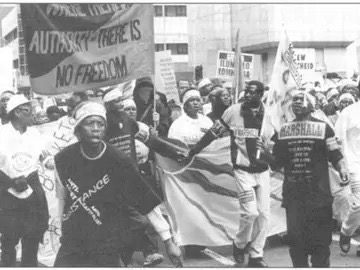
The resolution did not emerge overnight. It sits at the end of a decades-long movement led by Pan-African thinkers, historians, and activists who have insisted that the global community confront the true scale of the slave trade and colonial exploitation.
Milestones along this journey include the 1993 Abuja Proclamation on reparations and the 2001 Durban Conference, where slavery was internationally recognised as a crime against humanity.
More recently, conferences across Africa and the Caribbean have explored the practical question that follows recognition: what justice should look like.
In this sense, the AU’s declaration is both symbolic and strategic. It creates a political foundation for Africa to push the conversation further into international law, diplomacy and economic negotiations.
The Reparations Question
The moment any discussion of colonial crimes arises, the word “reparations” inevitably follows.
For some observers, the concept conjures images of financial compensation alone. But the modern reparations movement, particularly within Africa and the diaspora, is far broader.
Advocates argue that meaningful repair could include:
• formal acknowledgements and apologies from former colonial powers
• the return of looted cultural artefacts
• investment in education, infrastructure, and technology
• structural reforms to global economic institutions.
The point is not simply to settle a historical debt. It is to address the long-term consequences of extraction that continue to shape global inequality.
When entire regions were reorganised to serve imperial economies, development paths were permanently altered. The question therefore becomes: can global systems that benefited from those structures help correct them?
Why This Moment Matters Now
The AU’s decision arrives at a time when debates about history are intensifying worldwide. Museums are reassessing their collections. Universities are examining colonial legacies. Statues that once stood unquestioned are being reconsidered.
Yet Africa has often been a spectator in conversations about its own past.
This resolution changes that dynamic. By speaking collectively through the African Union, the continent positions itself not as an object of historical study but as an active participant in defining global memory.
It also strengthens alliances with African diaspora communities across the Caribbean, Europe, and the Americas—communities whose histories are inseparable from the same systems of slavery and colonial rule.
The Global Conversation Ahead
Whether the world embraces the AU’s framing remains uncertain. Legal recognition at the United Nations would require broad international consensus, something that rarely comes easily when history intersects with geopolitics.
Yet, the significance of the declaration does not depend solely on legal outcomes.
Its deeper impact lies in shifting the conversation. By asserting that slavery and colonialism constitute crimes of the highest order, Africa is challenging the world to reconsider the foundations of modern global systems.
This challenge is not about assigning blame across generations. It is about understanding how the past continues to shape the present and deciding what responsibility comes with that knowledge.
Reclaiming the Future
History is often portrayed as something fixed, written and sealed. In reality, it evolves as societies gain new perspectives and the courage to confront old truths.
The African Union’s resolution represents one such moment of reckoning. It is an invitation to examine the past honestly and to ask uncomfortable but necessary questions about justice, memory and global fairness.
For Africa, it is also a declaration of intellectual independence: the continent insisting that its experiences, its suffering, and its resilience will no longer be interpreted solely through external lenses.
And perhaps that is the most powerful outcome of all.
When Africa tells its story on its own terms, the world is forced to listen.







Leave a comment