


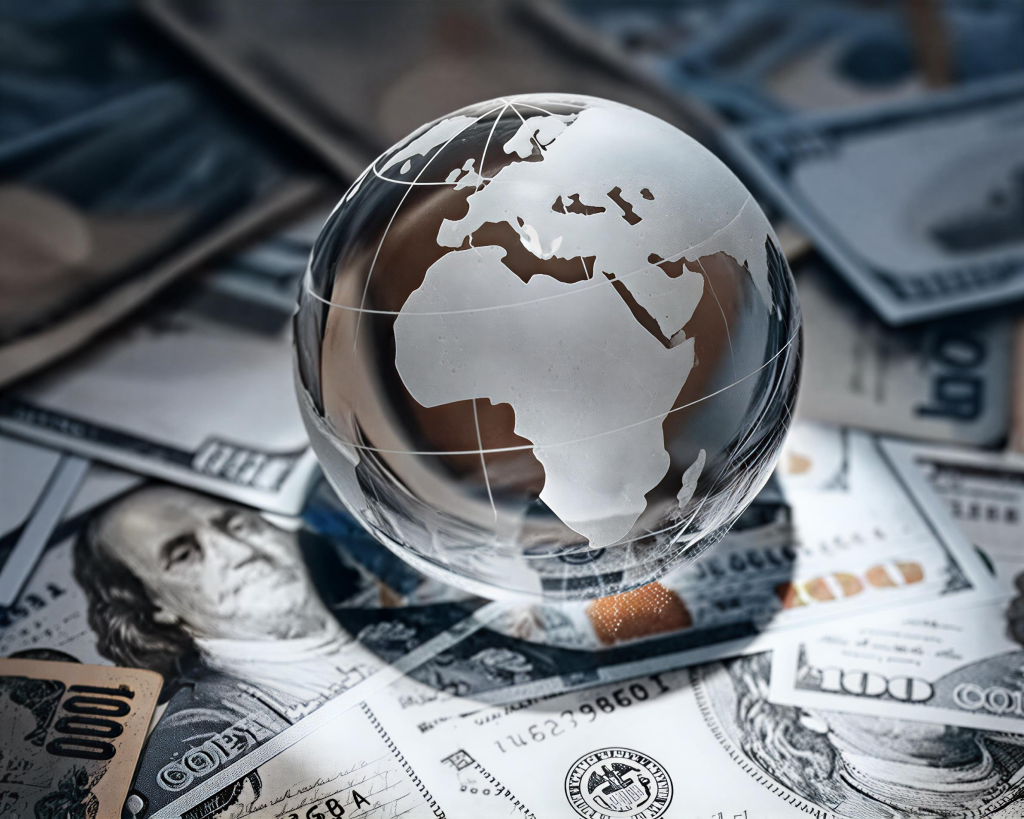
Africa is no longer just reacting to global economic shifts; it is actively rewriting the script—through faster growth, new alliances, and homegrown innovation that is beginning to shape, not just follow, the global economy.
The New Center of Gravity
For the first time, Africa is consistently among the fastest‑growing regions in the world, even in a period marked by war, inflation, and tightened global liquidity. In 2025, Africa was the fastest‑growing region globally and hosted 11 of the world’s 15 fastest‑growing economies, underscoring how the continent’s growth is no longer an outlier but a structural trend.
This momentum rests on three pillars: a young, rapidly urbanizing population, vast renewable and mineral resources, and a quickly expanding consumer market that global companies can no longer ignore. By 2050, Africa will have the world’s largest working‑age population, turning demographics into a strategic economic advantage rather than a footnote.
Growth in a Fragmented World
As traditional powers fall into trade wars and protectionism, Africa is positioning itself as a connector in a fragmented global system. While the US and EU redirect resources toward defense and domestic priorities, African governments are using multilateral platforms—from the African Union’s new permanent G20 seat to South Africa’s G20 presidency—to push reforms to the global financial architecture and demand fairer access to capital.
Even with lingering debt stress and post‑pandemic scars, African economies are outperforming many peers and attracting capital into sectors like renewable energy, financial services, and technology. Global players such as JP Morgan, Mastercard, and large energy firms are scaling up operations, not as charity, but because returns in African markets are increasingly competitive.
Strategic Alliances: From Aid to Leverage
Africa’s external relationships are shifting from dependency to negotiation. Instead of relying on a single partner, African states are deliberately diversifying between China, the BRICS bloc, the Gulf, the EU, and the US—playing in a multipolar arena to extract better terms.
- China is deepening its role as Africa’s largest trading partner, rolling out broader zero‑tariff access to African exports and investing in ports, railways, and power grids that knit African economies into global value chains.
- BRICS is emerging as a core platform where African governments seek development finance, industrial know‑how, and political alignment outside Western‑dominated institutions, with the BRICS New Development Bank financing infrastructure alongside African Union programs.
- Gulf states, led by the UAE, are pouring capital into logistics, agribusiness, and energy, turning the Gulf–Africa corridor into one of the most dynamic investment routes in the Global South.
The key difference now is leverage: trade preferences, infrastructure deals, and security partnerships are negotiated against the backdrop of Africa’s critical minerals, clean‑energy potential, and growing markets, not from a position of weakness.
AfCFTA: Rewiring Trade from Within
If external alliances are Africa’s new diplomatic currency, the African Continental Free Trade Area (AfCFTA) is its internal engine. Launched in 2021, AfCFTA aims to knit 1.4 billion people into a single market by cutting tariffs, harmonizing regulations, and building cross‑border value chains that reduce dependence on raw commodity exports.
Full implementation could lift up to 30 million people out of extreme poverty and boost continental income by around 450 billion dollars by 2035, largely by expanding manufacturing, agro‑processing, and services. By 2045, intra‑African trade in goods is projected to jump roughly 45%, increasing industrial output and slightly raising GDP and welfare at the continental level.
Trade and Integration Snapshot
| Dimension | Current Shift |
|---|
Beyond tariffs, new digital and transport corridors are being built: subsea cables, fibre networks, and data centers are linking markets, while UNECA estimates more than 120 billion dollars is needed by 2030 to unlock AfCFTA’s full infrastructure potential. These investments turn borders from barriers into bridges, making it cheaper for African businesses to trade with each other than with distant markets.

Technology, Energy, and Local Innovation
Africa’s economic realignment is not only happening at the level of presidents and trade ministers; it is happening in code, in grids, and in cities. Tech ecosystems from Lagos to Nairobi and Cape Town are scaling, with Africa’s fintech sector now valued at over 3 billion dollars and rapidly expanding access to savings, credit, and insurance via mobile platforms.
Digital policies and alliances—such as the AfCFTA Digital Trade Protocol, Smart Africa, and continental data frameworks—are designed to pull African startups into global digital value chains rather than leave them on the periphery. Large-scale broadband and cloud investments, including major subsea cable projects, are laying the rails for 5G, e‑commerce, and AI‑enabled services that can leapfrog legacy infrastructure.
On the energy side, Africa’s solar and wind potential, coupled with its deposits of lithium, cobalt, and other critical minerals, position the continent at the center of the global green transition. New frameworks around critical minerals and beneficiation seek to move Africa beyond exporting raw ore, pushing instead for local refining, battery manufacturing, and value‑added processing as part of global supply chains.
Africa in a World of Conflict
Global wars—from the Middle East to Eastern Europe—do not spare Africa, but they also deepen Africa’s strategic importance. Disruptions in shipping routes, food exports, and energy markets ripple into African economies through higher prices and tighter financing, yet they simultaneously raise the premium on Africa’s own food, energy, and mineral production capacity.
As traditional donors divert budgets to defense, African leaders are responding by accelerating South–South partnerships and insisting on reforms to global institutions rather than accepting crisis as destiny. The shift is subtle but decisive: Africa is no longer framed as a passive victim of global shocks, but as a central actor whose decisions—from how it trades to how it votes in multilateral forums—can tilt the balance in an increasingly multipolar world.
In this new landscape, the headline is simple: the world’s economic centre of gravity is tilting toward Africa—not as a promise for tomorrow, but as a bargaining chip today, reshaping how power, growth, and opportunity are distributed globally.







Leave a comment