

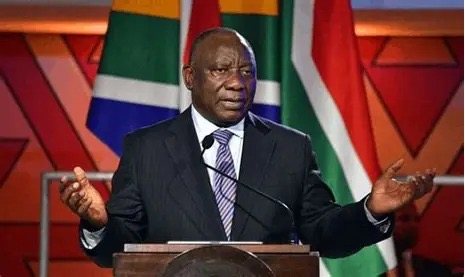
In a speech that has ignited social media and sparked fierce debate across the continent, South African President, Cyril Ramaphosa unleashed a passionate defense of Black Economic Empowerment (BEE), vowing to close the “unacceptable gulf” in wealth between Black Africans and whites. Delivered amid parliamentary heckling following his February 12 State of the Nation Address (SONA), the address, now viral with millions of views touches a raw nerve in post-apartheid South Africa and resonates deeply with Pan-African youth grappling with inherited inequalities. Ramaphosa’s words are more than rhetoric; they signal a renewed push for economic justice in Africa’s most industrialized economy, with implications for the entire continent’s decolonization of wealth.
In a speech that has ignited social media and sparked fierce debate across the continent, South African President, Cyril Ramaphosa unleashed a passionate defense of Black Economic Empowerment (BEE), vowing to close the “unacceptable gulf” in wealth between Black Africans and whites. Delivered amid parliamentary heckling following his February 12 State of the Nation Address (SONA), the address, now viral with millions of views touches a raw nerve in post-apartheid South Africa and resonates deeply with Pan-African youth grappling with inherited inequalities. Ramaphosa’s words are more than rhetoric; they signal a renewed push for economic justice in Africa’s most industrialized economy, with implications for the entire continent’s decolonization of wealth.
A Personal Reckoning with Legacy
Ramaphosa didn’t mince words, drawing from his own life in the mines where apartheid denied Black workers basic certifications, forcing whites to earn ten times more for identical labor. “This issue touches a very raw nerve in me,” he declared, slamming critics who decry BEE as reverse racism. He laid bare the stats: Black African household incomes rose 46% from 2002 to 2023, poverty plummeted from 67% to 44%, yet white households still earn nearly five times more. For coloured and Indian communities, gains are real—poverty down from 43% to 25%, but the disparity festers, fueling youth frustration in townships from Soweto to Khayelitsha.
This isn’t abstract policy; it’s lived reality. In a nation where whites, 7.7% of the population, control 72% of farmland and top corporate boards, Ramaphosa positioned BEE not as charity, but as “deliberate and sustained efforts to expand opportunity.” His vow echoes Pan-African icons like Nkrumah and Nyerere, who warned that political independence without economic control breeds neocolonialism.A Personal Reckoning with Legacy
Ramaphosa didn’t mince words, drawing from his own life in the mines where apartheid denied Black workers basic certifications, forcing whites to earn ten times more for identical labor. “This issue touches a very raw nerve in me,” he declared, slamming critics who decry BEE as reverse racism. He laid bare the stats: Black African household incomes rose 46% from 2002 to 2023, poverty plummeted from 67% to 44%, yet white households still earn nearly five times more. For coloured and Indian communities, gains are real—poverty down from 43% to 25%, but the disparity festers, fueling youth frustration in townships from Soweto to Khayelitsha.
This isn’t abstract policy; it’s lived reality. In a nation where whites, 7.7% of the population, control 72% of farmland and top corporate boards, Ramaphosa positioned BEE not as charity, but as “deliberate and sustained efforts to expand opportunity.” His vow echoes Pan-African icons like Nkrumah and Nyerere, who warned that political independence without economic control breeds neocolonialism.
The Broader Pan-African Echo
South Africa’s struggle mirrors Africa’s unfinished revolution. From Nigeria’s oil wealth hoarded by elites to the Democratic Republic of Congo’s cobalt riches funding foreign tech giants, racial and colonial wealth gaps persist. Ramaphosa’s speech arrives as the African Continental Free Trade Area (AfCFTA) gains traction, urging intra-African investment to bypass Western gatekeepers. Zimbabwe’s recent raw mineral export ban echoes beneficiation calls, shows neighbors that prioritizing local value addition, much like Ramaphosa’s BEE overhaul is highly imperative.
Youth across the continent, Africa’s demographic powerhouse (60% under 25), cheered the viral clip. On TikTok and X, #RamaphosaRaw trends with memes blending his mining tales and calls for “Black ownership now.” Yet skeptics, including DA leader John Steenhuisen, label it populist pandering amid 32% unemployment, warning of capital flight. Ramaphosa countered: Abandoning BEE now would betray the 1994 miracle, as white monopoly capital which was once 95% of JSE ownership dips to 20%.
Policy Pivot: BEE 2.0
The president announced a comprehensive BEE review, aiming for sharper focus on skills transfer, worker ownership and exporter growth, nodding to the Black Industrialists program. Since 2018 speeches on “white privilege and Black poverty,” progress includes 1,200 Black industrialists mentored, but critics say fronting (fake empowerment deals) undermines it. Ramaphosa pledged enforcement against malpractices, linking it to SONA goals like 2 million new jobs via infrastructure.
Economically, stakes are high. South Africa’s GDP growth hovers at 1.2%, hampered by loadshedding and logistics woes, but BEE has funneled billions into Black firms. Pan-African investors eye opportunities: Nigerian banks partner on fintech, Ethiopian airlines expand routes, fostering South-South ties.
Youth at the Vanguard
For Africa’s youth like Johannesburg hustlers coding apps or Lagos entrepreneurs in agrotech, Ramaphosa’s vow is a battle cry. It recalls #FeesMustFall and EndSARS, where economic exclusion sparked fury. Success here could model for Zambia’s copper nationalism or Kenya’s Silicon Savannah equity pushes.
Yet challenges loom: Corruption scandals erode trust, global investors jittery post-Trump tariffs. Ramaphosa must deliver measurable wins; say, 30% Black managerial rise by 2030 to sustain momentum.
A Continental Call to Action
Ramaphosa’s speech transcends Mzansi borders, reigniting Pan-Africanism’s economic core. As he said, “It cannot be acceptable” for Black, coloured, and Indian South Africans to lag. Africa’s youth demand proof: Will reviews birth real ownership, or more reports? The gulf closes not with vows alone, but factories humming, farms thriving, and JSE boards reflecting rainbow faces.







Leave a comment