

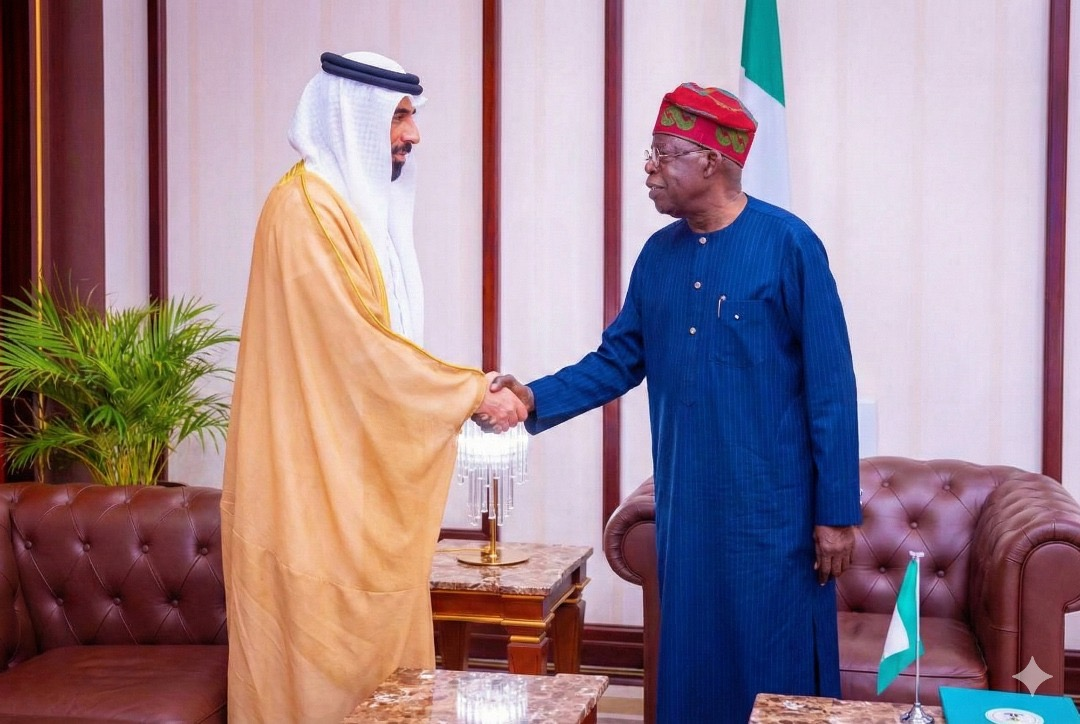
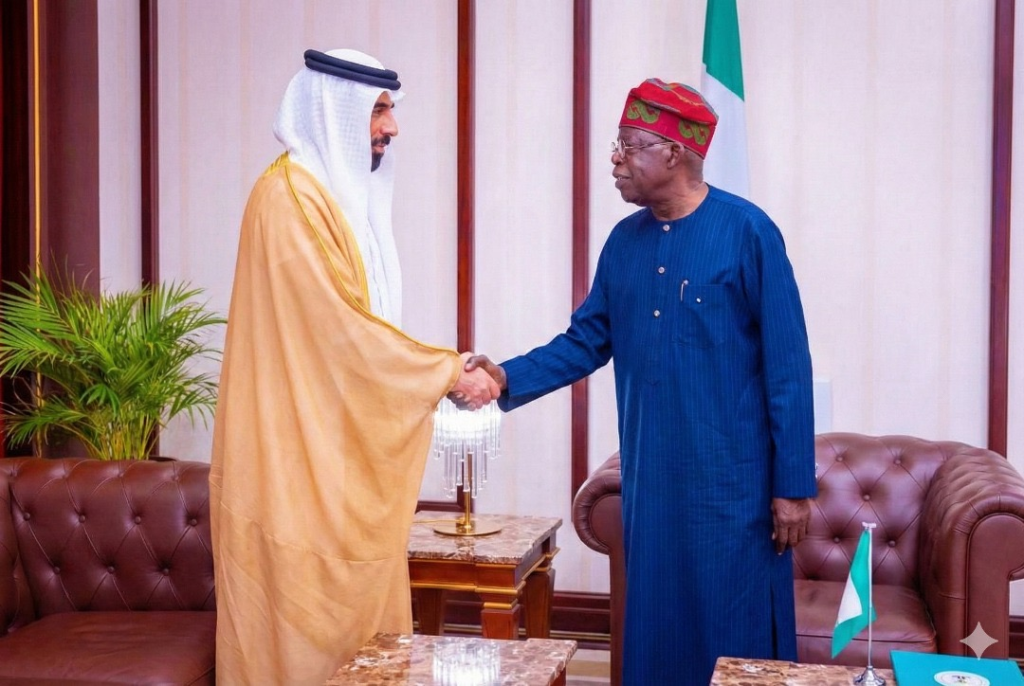
Nigeria has taken a major step towards positioning itself and Africa as a serious destination for global investment, following the signing of a Comprehensive Economic Partnership Agreement (CEPA) with the United Arab Emirates (UAE).
President Bola Tinubu announced on Tuesday that Nigeria will co-host Investopia with the UAE in Lagos this February, a global investment forum designed to connect investors, innovators, policymakers, and business leaders. The announcement was made during the 2026 Abu Dhabi Sustainability Week (ADSW), where the landmark economic agreement between both countries was also finalised.
The CEPA is expected to deepen cooperation across key sectors including renewable energy, infrastructure, logistics, digital trade, aviation, agriculture, and climate-smart development. For Africa’s largest economy, the agreement represents more than a bilateral win, it signals a growing shift in how global capital engages with African markets.
Present at the signing were President Tinubu, UAE President Mohamed bin Zayed Al Nahyan, Nigeria’s Minister of Industry, Trade and Investment Jumoke Oduwole, and the UAE’s Minister of Foreign Trade Thani Al Zeyoudi.
Describing the agreement as historic, President Tinubu said the partnership would create long-term opportunities for both nations while strengthening Nigeria’s role as a regional investment hub.
With Lagos set to host Investopia, Nigeria is positioning itself as a gateway for capital flows into West Africa and the wider continent, particularly in sectors aligned with sustainability, innovation, and industrial growth.
“Investopia will transform opportunities into commitments and ideas into investment,” Tinubu said, inviting global partners to help shape “the next chapter of sustainable and shared prosperity for Nigeria, Africa, and the world.”
At the summit, the President outlined Nigeria’s ambition to mobilise up to $30 billion annually in climate and green industrial finance, as the country accelerates energy transition reforms and works to expand electricity access nationwide.
He emphasised that electricity remains the backbone of any rmodern economy, noting the challenge facing emerging economies in balancing industrialisation with decarbonisation.
Nigeria, he added, is calling for a rethink of the global financial system; particularly the heavy reliance on sovereign guarantees, which often limit access to capital for developing countries. Instead, the government is advocating blended finance models and first-loss capital structures that can unlock private investment without placing further strain on public finances.
To boost investor confidence, Nigeria has introduced a National Carbon Market Activation Policy and launched a National Carbon Registry, aimed at improving transparency and accountability within its climate framework.
Energy reforms were also highlighted, with the Electricity Act 2023 enabling decentralised power generation and distribution, especially for underserved communities. Current initiatives include a $500 million distributed renewable energy fund backed by the Nigeria Sovereign Investment Authority, alongside a $750 million World Bank programme expected to expand clean electricity access to more than 17.5 million people.
President Tinubu reaffirmed Nigeria’s commitment to achieving net-zero emissions by 2060, while still pursuing industrial growth and job creation. He also invited foreign investors to partner in Nigeria’s lithium and critical minerals sector, stressing the importance of local processing and value addition—an approach that could serve as a model for resource-rich African nations seeking to move beyond raw exports.
Beyond climate and energy, the President pointed to the impact of ongoing economic reforms, revealing a 21 per cent growth in non-oil exports and more than $50 billion in investment commitments across key sectors.
For Africa, Nigeria’s growing engagement with global partners like the UAE underscores a broader opportunity: one where the continent is not just seeking capital, but actively shaping the terms of sustainable, inclusive growth.
“We are ready to work with partners across the world to ensure that the next era of development is not only green and inclusive, but just and enduring,” Tinubu said.






Leave a comment