

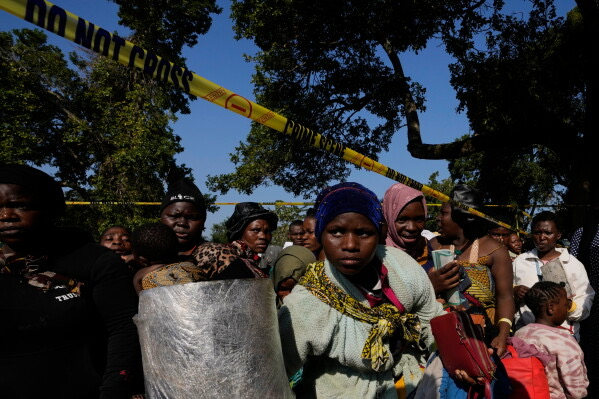
Thousands of Malawian migrants queued for processing at a makeshift camp in Durban this week while hundreds of Zimbabweans slept on the pavement outside their consulate in Cape Town, all with the same goal: to leave South Africa before nationwide anti-immigrant protests on Tuesday, which many fear will descend into violence. “We are scared because you never know what people are planning to do to you. It’s not right to wait and see what will happen,” said Ebrahim Moosa, a 37 year old, queueing with his wife for a bus to Malawi.
A Deadline With No Legal Basis, but Real Consequences
The 30th June deadline originates from messaging circulated by anti-immigration protest movements including Operation Dudula and allied civic formations, framing it as a symbolic cut-off tied to protests over unemployment, crime, and immigration enforcement. Fact-checking organisations have reported that this “deadline” is not an official government directive, and South African authorities have explicitly stated that the 30th of June is not a shutdown date or ultimatum, but a normal working day.
That official clarification has done little to ease the panic. By mid-May 2026, at least seven people had reportedly been killed since the protests began in March, with fresh violence in the coastal town of Mossel Bay in late May leaving several dead and displacing hundreds of foreign nationals. In Kleinmond, about 100 immigrants from Malawi and Mozambique sheltered in the town hall after mobs went door to door ordering foreigners to leave, some spending nights hiding in nearby mountains. Three people, including a Malawian man and two Mozambican nationals, were killed during the protests in KwaZulu-Natal and the Western Cape.

The Numbers Behind the Exodus
Deportations have risen 46 percent over the past two financial years, from just shy of 58,000 in 2024-2025 to 109,344 as of March 2026. Following the recent protests, the government processed more than 8,000 foreign nationals for repatriation at the Beitbridge border post in less than two weeks. Local media report that 6,936 Malawians have returned home since the repatriation exercise began, with South African authorities saying 15,162 Malawian nationals have so far been processed for deportation and repatriation. Malawi’s Department of Disaster Management Affairs estimated about 10,000 Malawians in South Africa were in distress and activated a “comprehensive response plan” to ensure their “safe, orderly and dignified” return.
Government Response and Security Buildup
South African Police Services launched a special $36 million operation ahead of Tuesday’s protests, with acting Minister of Police Firoz Cachalia saying police would not tolerate violence or lawlessness. President Cyril Ramaphosa said on Thursday: “Our security forces are ready.” March and March, the main organisation behind the protests, has said it is not calling for violence, but has added it will not take responsibility for anything that happens on the 30th of June.
On the 7th of June, Ramaphosa addressed the nation, announcing a Comprehensive Approach for Migration Management, including dedicated immigration courts to speed up deportations and the recruitment of 10,000 labour inspectors. He warned that no one was permitted to stop people in the street to demand proof of nationality, and said the government would act against those exploiting the issue for political, personal, or criminal ends.
As the time for the protest approaches, South Africa finds itself, in the words of one report, on a knife-edge not seen since the devastating riots of July 2021. For the thousands of foreign nationals still deciding whether to flee or stay, that uncertainty is not a headline. It is daily life.
Africa Presents is a Pan-African digital magazine and monthly publication covering politics, business, economy, culture, tech, and the stories shaping Africa and its diaspora. Visit africapresents.com and follow @AfricaPresents for daily coverage and monthly themed magazine editions.






Leave a comment