

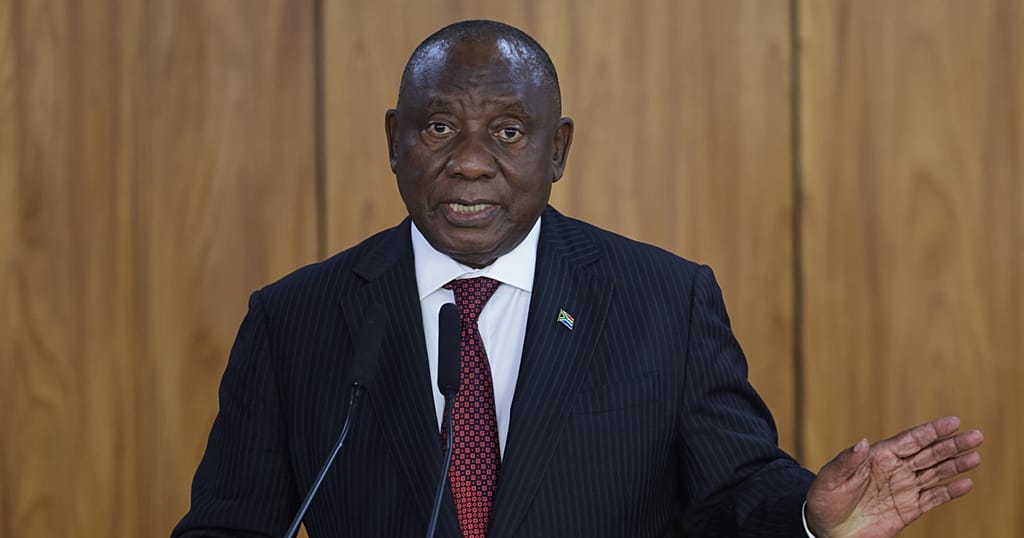
South African President Cyril Ramaphosa has vowed to crush any attempts to destabilise the nation during planned anti-immigrant marches next week, amid a sustained wave of xenophobic unrest. “We will not tolerate any attempts to destabilise the country by anyone, whether marching or otherwise,” he told the upper house of parliament. “Our security forces are ready, and those who transgress the measures that we are putting in place will definitely meet the might of the law.”
Citizen-led groups have set Tuesday, 30 June as a deadline for undocumented foreigners to leave the country and have called for nationwide marches against illegal immigration, the crescendo of months of protests that have at times turned violent. Defence Minister Angie Motshekga said the military will secure strategic sites such as airports and stand ready to assist police if needed, while police have tightened security nationwide ahead of the deadline.
A Crisis That Has Already Turned Deadly

Foreign-owned businesses have been attacked and looted across multiple provinces, migrants have been chased from their homes, and several people have been killed. Five Mozambicans were killed in Mossel Bay, and a series of attacks on Ethiopian-owned businesses were reported in Gauteng province. On the 20th of May, Human Rights Watch reported that vigilantes had carried out violent attacks targeting African and Asian foreign nationals with little apparent police response, documenting cases of shop owners being beaten, pepper-sprayed, and attacked with golf clubs and sjamboks.
The anti-migrant campaign has already spurred voluntary repatriations of thousands of foreigners from elsewhere in Africa, including Ghana, Malawi, Mozambique and Nigeria. Makeshift camps have mushroomed in Durban and Johannesburg as thousands await transport to their home countries, prompting warnings from aid groups of a deepening humanitarian crisis. Nigeria, Malawi, Zimbabwe, Ghana and Mozambique have all operated or are planning further evacuation flights through the end of the month.
The Drivers Behind the Unrest
Among Africa’s largest and most industrialised economies, South Africa has long been a prime destination for people seeking work, even though its own unemployment rate hovers around 32 per cent. Competition for scarce work has fuelled resentment, and some South Africans blame migrants for both poverty and crime. Human Rights Watch has noted these groups scapegoat foreign nationals for the country’s economic woes and crime rates, despite studies that disprove the claims.
While Ramaphosa and major labour unions say migrants are being scapegoated for the country’s problems, some politicians have seized on the issue to court populist support ahead of local government elections later this year. Political parties including ActionSA, the Patriotic Alliance, and the IFP have been seen engaging with the protest movements, with analyst Goodenough Mashego warning some parties may be using anti-immigration sentiment for political advantage. The presidency has rejected claims that the country itself is xenophobic.
Organisers of the 30th June demonstrations insist their movement is peaceful, with one coalition demanding tighter border security, increased funding for Home Affairs, and more deportations of undocumented migrants, while blaming any potential violence on government failures in policing and border control rather than their own movement.
International and Continental Pressure
The African Union has called on South Africa to guarantee the safety of all foreign nationals within its borders. The African Commission on Human and Peoples’ Rights has called on South Africa’s government to conduct prompt, thorough and impartial investigations into reported violence, ensure accountability and access to justice for perpetrators, and take decisive measures to dismantle vigilante groups engaging in unlawful enforcement activities. UN Secretary-General António Guterres has also expressed concern, condemning vigilantism and incitement to hatred as having no place in a democratic society.
A Gauteng High Court judgment has separately found that the South African Police Service and the departments of Home Affairs and Justice failed to protect migrants from vigilantism. The unrest also casts a shadow over South Africa’s global standing just weeks after it hosted World Cup group matches as one of the tournament’s co-hosts.
With the deadline now days away and security forces on standby nationwide, the test facing Ramaphosa’s government is whether Thursday’s warning translates into a 30th of June that passes, in his words, as “a normal day.”
Africa Presents is a Pan-African digital magazine and monthly publication covering politics, business, economy, culture, tech, and the stories shaping Africa and its diaspora. Visit africapresents.com and follow @AfricaPresents for daily coverage and monthly themed magazine editions.






Leave a comment