

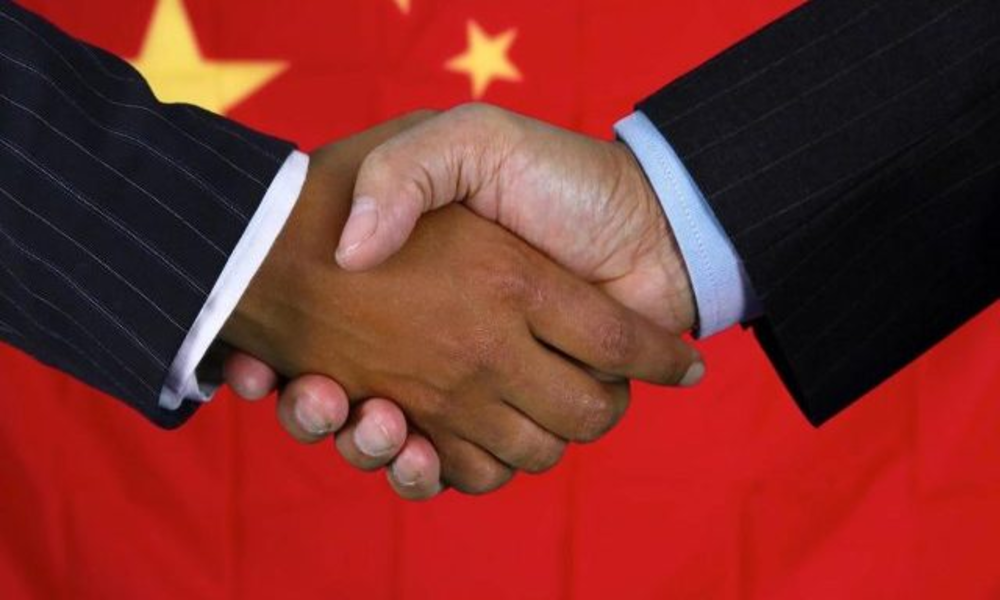
China has reaffirmed its long-standing partnership with Africa, promising deeper economic cooperation and expanded market access for African goods as part of renewed diplomatic engagement with the continent. Speaking in March, China’s Foreign Minister Wang Yi said relations between China and Africa have endured decades of global political and economic shifts while continuing to grow stronger. “China-Africa friendship has stood the test of changing international circumstances and shown strong vitality,” he said, noting that the two sides have maintained close political and economic ties for 70 years.
In a significant economic move, Wang Yi announced that China would grant zero-tariff access for 100 per cent of African imports starting on the 1st of May, a policy Beijing says will boost trade, create economic opportunities and enable African countries to benefit from the vast Chinese market. China and African leaders have also designated 2026 the China-Africa Year of People-to-People Exchanges, with the initiative launched at the African Union headquarters in Addis Ababa in January, where Wang Yi visited Ethiopia, Somalia, Tanzania, and Lesotho on his 36th consecutive annual New Year tour of the continent.
The Trade Numbers
China-Africa bilateral trade was valued at over $350 billion in 2025, with infrastructure projects and an expanding range of soft-power initiatives, including youth forums, language training, and exhibitions, running alongside the economic relationship. Experts have flagged the digital economy and green development as two promising areas for deeper cooperation, with Chinese expertise in e-commerce, digital payments, and renewable energy seen as supportive of Africa’s industrialisation goals.
Africa’s Push for a More Balanced Partnership
Not every aspect of the relationship is being driven by Beijing’s agenda. African countries are seeking to rebalance their ties with China toward debt sustainability, value addition, and industrialisation, moving toward a more equal and transparent partnership that prioritises long-term African development. Ambassador Fred Ngoga, who coordinates external partnerships for the African Union, said the relationship with China is shifting from a focus on aid and infrastructure toward a more strategic partnership aligned with Agenda 2063, with a central priority being making debt more sustainable and manageable.
On industrialisation specifically, at least 13 African countries have banned raw critical mineral exports to push China and other partners toward value addition on the continent, while the African Union is helping establish an association of critical mineral producers to strengthen collective bargaining power. Countries are also enacting policies requiring more technology transfer from foreign partners, with Rwanda pursuing full-cycle electric vehicle manufacturing through strict tech-transfer agreements, and Africa’s first EV battery gigafactory set to begin production in 2026 in Morocco.
Currency dynamics are shifting too. Kenya has moved to restructure its dollar-denominated debt into Chinese yuan, Ethiopia is in talks with Chinese lenders on a similar conversion, and Zambia’s central bank has started accepting royalty payments from foreign companies in Chinese currency, the first African country to make such a move.
A Selective, More Negotiated Relationship
By 2026, China’s engagement with Africa has entered a more selective and negotiated phase, with some countries deepening cooperation where projects deliver trade and industrial gains, while others are deliberately widening ties with alternative global partners, not as a rejection of China, but as a strategy to strengthen their own negotiating power within a competitive, multipolar world.
For African governments, the relationship that once centred almost entirely on aid and infrastructure financing is being reshaped, deal by deal, into something closer to a negotiation between equals, one where debt terms, technology transfer, and local value addition are now as central to the conversation as the size of the next loan or zero-tariff announcement.
Africa Presents is a Pan-African digital magazine and monthly publication covering politics, business, economy, culture, tech, and the stories shaping Africa and its diaspora. Visit africapresents.com and follow @AfricaPresents for daily coverage and monthly themed magazine editions.







Leave a comment