

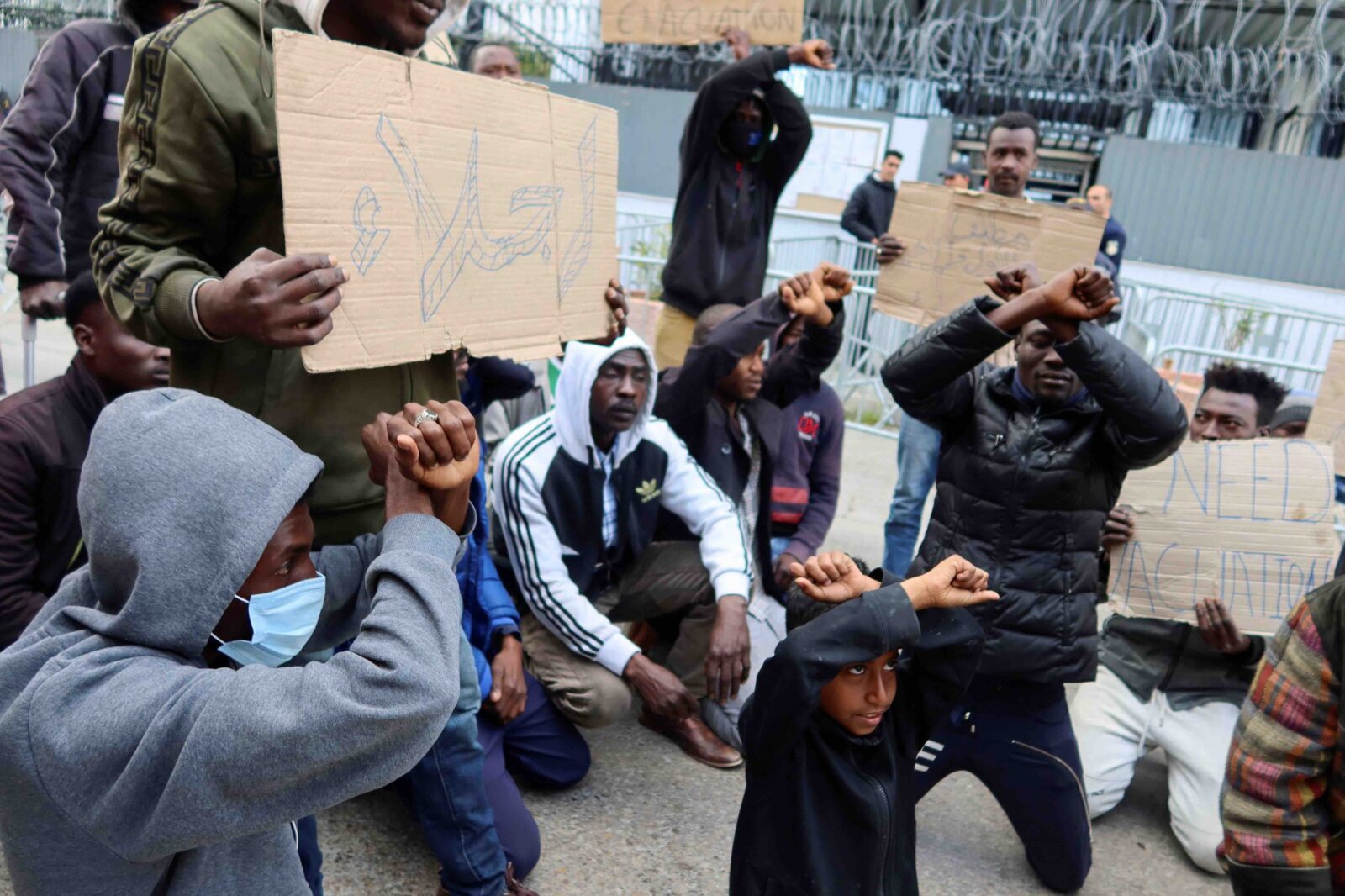
Protesters gathered on Saturday outside the headquarters of the United Nations High Commissioner for Refugees (UNHCR) in the Lac district of Tunis, demanding the deportation of undocumented sub-Saharan African migrants and calling on the organisation to leave Tunisia entirely. The demonstration took place under a heavy security presence, with numerous security vehicles surrounding the UNHCR compound and protesters kept at a distance from the building.
The protest is the latest expression of a crisis that has been building in Tunisia for years, and whose human consequences for sub-Saharan African migrants have drawn sustained condemnation from human rights organisations across the continent and beyond.
Three Years of Escalating Hostility
The current climate traces directly to February 2023, when President Kais Saied described undocumented migrants, many from sub-Saharan Africa, as a demographic threat to the Arab-majority country. His remarks triggered a wave of racially motivated attacks, forcing thousands of sub-Saharan African migrants from their homes and jobs. Thousands were repatriated or attempted to cross the Mediterranean, while others were expelled to desert border regions with Algeria and Libya, where at least a hundred died that summer.
In May 2024, President Saied publicly declared that associations defending sub-Saharan African migrants received funding from abroad, describing their members as “traitors and mercenaries.” A series of arrests of NGO leaders followed, including prominent anti-racism activist Saadia Mosbah, deepening a climate of uncertainty for human rights advocates operating in the country.
The clampdown on civil society has had direct operational consequences. Fourteen organisations partially suspended or reoriented their work, while five others suspended their activities altogether, leaving migrants with severely diminished access to legal assistance, asylum processing, and humanitarian support.
Trapped With No Way Forward
The statistics behind the demonstrations represent real lives in precarious circumstances. Among those affected are migrants who have fled ethnic violence, conflict, and persecution in their home countries, only to find themselves in Tunisia with a frozen asylum system and no pathway forward. Many live without assistance, without documentation, and without legal recourse in a country that has made their presence politically untenable.
In one of the most widely documented incidents, a group of Sierra Leonean asylum seekers were abandoned in the desert by Tunisia’s National Guard. Twenty-four-year-old Anderson was among those left stranded for 12 days before being rescued after a chance phone call initiated emergency efforts.
The African Union condemned the use of what it described as “racialised hate speech” by the Tunisian government following Saied’s 2023 remarks. The organisation has taken no further institutional action since that condemnation.
The Question the AU Has Not Yet Answered
Tunisia’s treatment of sub-Saharan African migrants sits at a painful intersection of continental identity and geopolitical reality. The country is a key transit point for tens of thousands of people seeking to reach Europe annually, and European governments have provided substantial funding to Tunisian authorities to manage those migration flows, drawing accusations that European policy interests are being prioritised over the rights and safety of African people on African soil.
For the continent, the events in Tunis carry an uncomfortable question: when African states become sites of anti-African violence, and when the AU’s response stops at condemnation, what does pan-African solidarity actually mean in practice? The protesters outside the UNHCR headquarters on Saturday had their answer. What the continent’s institutions offer in response remains, for too many people sleeping in makeshift camps between Tunis and the Algerian border, an open and urgent question.
Africa Presents is a Pan-African digital magazine and monthly publication covering politics, business, economy, culture, tech, and the stories shaping Africa and its diaspora. Visit africapresents.com and follow @AfricaPresents for daily coverage and monthly themed magazine editions.







Leave a comment